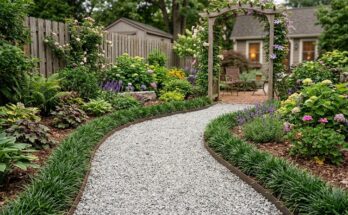
A truly magical child-friendly backyard design prioritizes both joyous play and paramount safety for your little ones. How can you transform your outdoor space into an imaginative wonderland that also offers peace of mind for parents?
Crafting the ultimate family backyard landscaping doesn’t have to be overwhelming. We’ll share seven essential tips to create a vibrant, engaging, and secure outdoor haven where creativity can flourish.
1. Define Distinct Play Zones
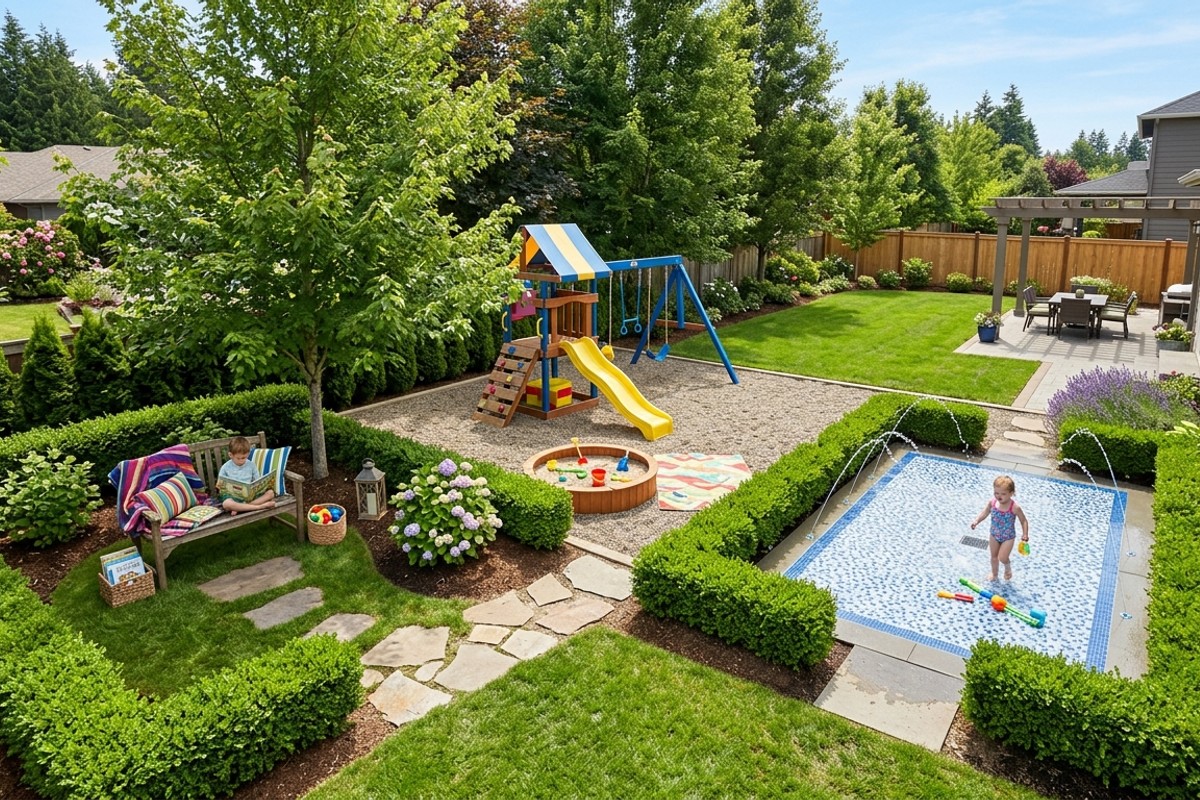
Divide your backyard into purposeful areas to cater to various activities and ages. Think about a quiet reading nook, a dynamic active play zone, and perhaps a small splash pad area.
Clearly defined zones help organize the space and encourage different types of engagement, making the most of your available square footage. Use low hedges, stepping stones, or different ground covers to naturally delineate these sections.
2. Prioritize Soft Landings and Safe Surfaces
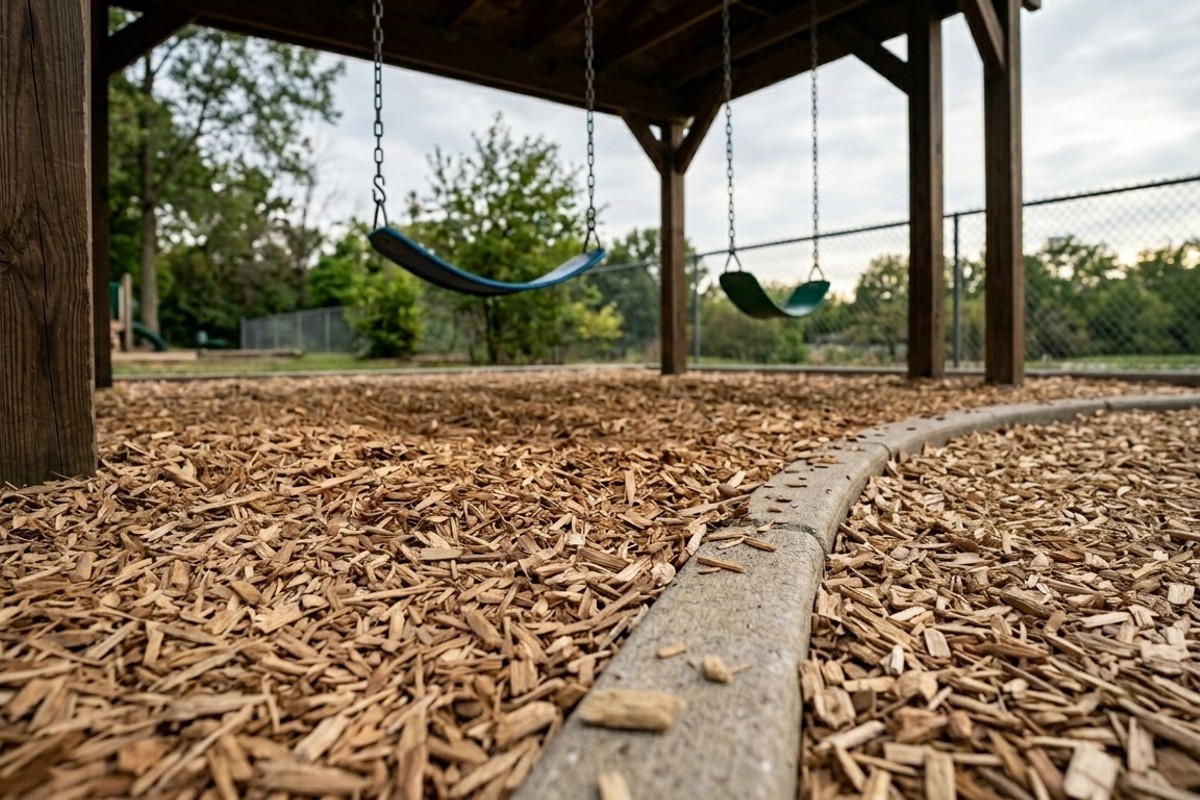
Beneath any climbing structures, swings, or slides, install appropriate impact-absorbing materials. Options like rubber mulch, engineered wood fiber, or fine pea gravel are excellent choices.
These materials significantly reduce the risk of injury from falls, making your backyard play area design inherently safer. Always ensure depths meet recommended safety standards for your specific play equipment.
3. Implement Natural Barriers and Fencing
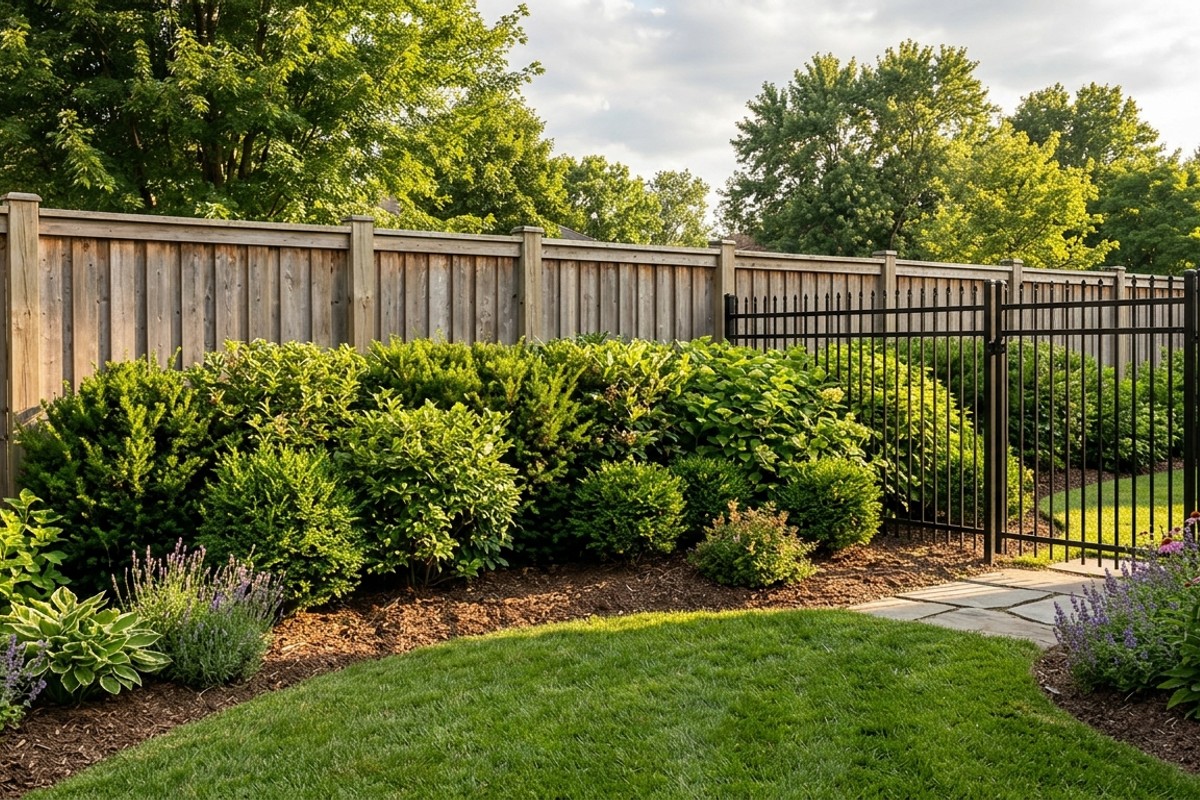
Secure your outdoor space with sturdy, well-maintained fencing to prevent unsupervised wandering. Consider attractive options like cedar privacy fences or ornamental iron with narrow spacing.
Additionally, use natural elements like dense shrubbery or strategically placed planters as soft barriers within the yard itself. This enhances visual appeal while still guiding children’s movement.
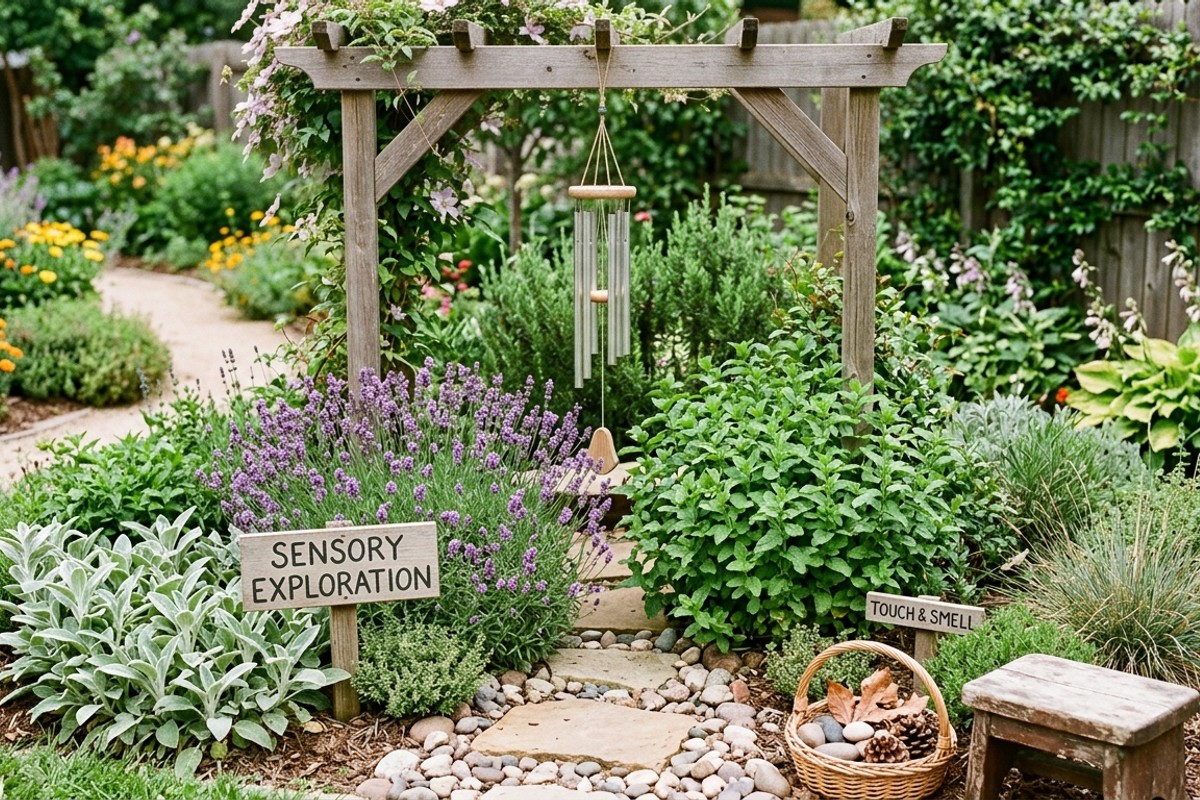
4. Design for a Truly Child-Friendly Backyard with Sensory Gardens
Engage all the senses by incorporating a dedicated sensory garden. Plant fragrant herbs like lavender and mint, install wind chimes for sound, and include textured plants for touch.
This fosters curiosity and a love for nature, offering a calming contrast to active play. Ensure all plants chosen are non-toxic and safe for little hands to explore.

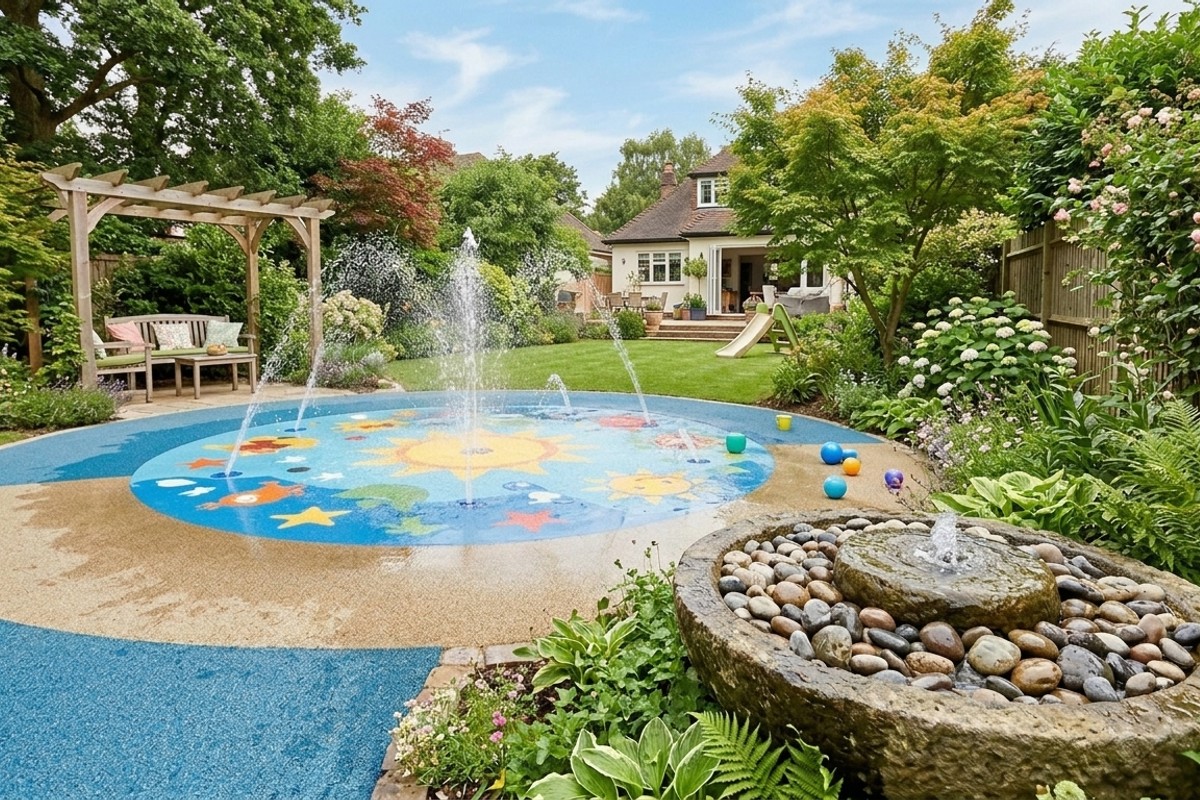
5. Choose Kid-Safe Backyard Ideas for Water Features
If you include water elements, opt for child-safe designs like shallow splash pads, pebble fountains, or recirculating streams. Avoid deep ponds or unsupervised swimming pools.
These features offer refreshing fun without significant drowning risks, and they can be easily turned off when not in use. Always maintain constant supervision around any water, regardless of its depth.
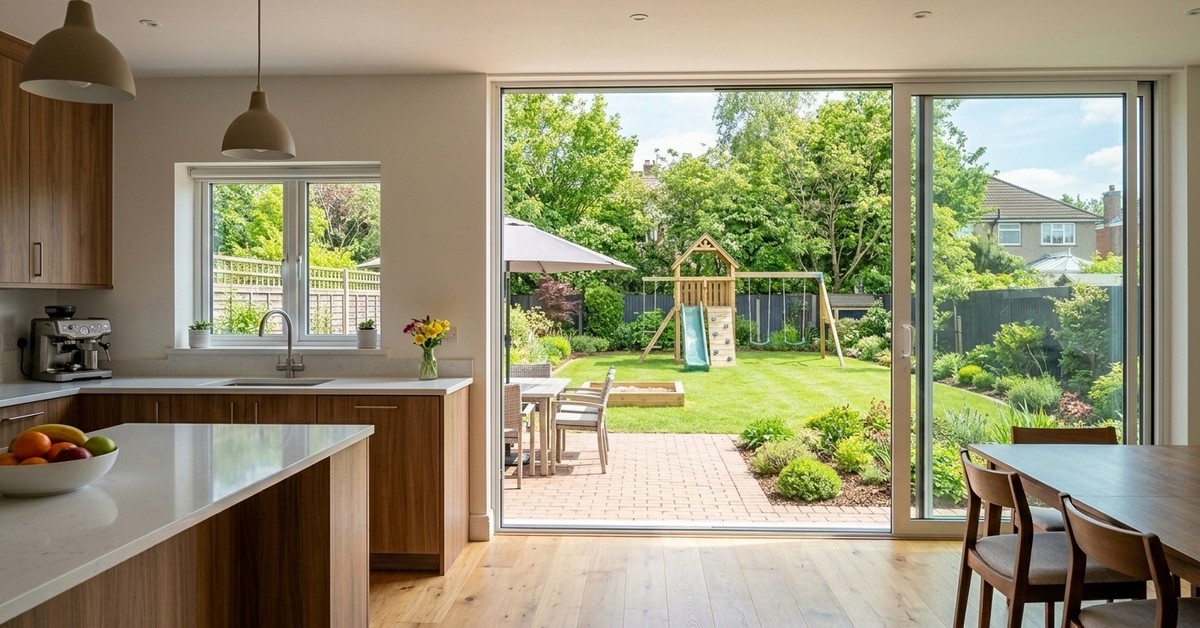
6. Optimize for Visibility and Supervision
Design your backyard with clear sightlines from common supervision points, such as a patio or kitchen window. Avoid tall, dense plantings that obstruct views of play areas.
This simple consideration is crucial for ensuring constant, effortless monitoring of children at play. Strategic landscaping allows adults to relax while knowing kids are safe.
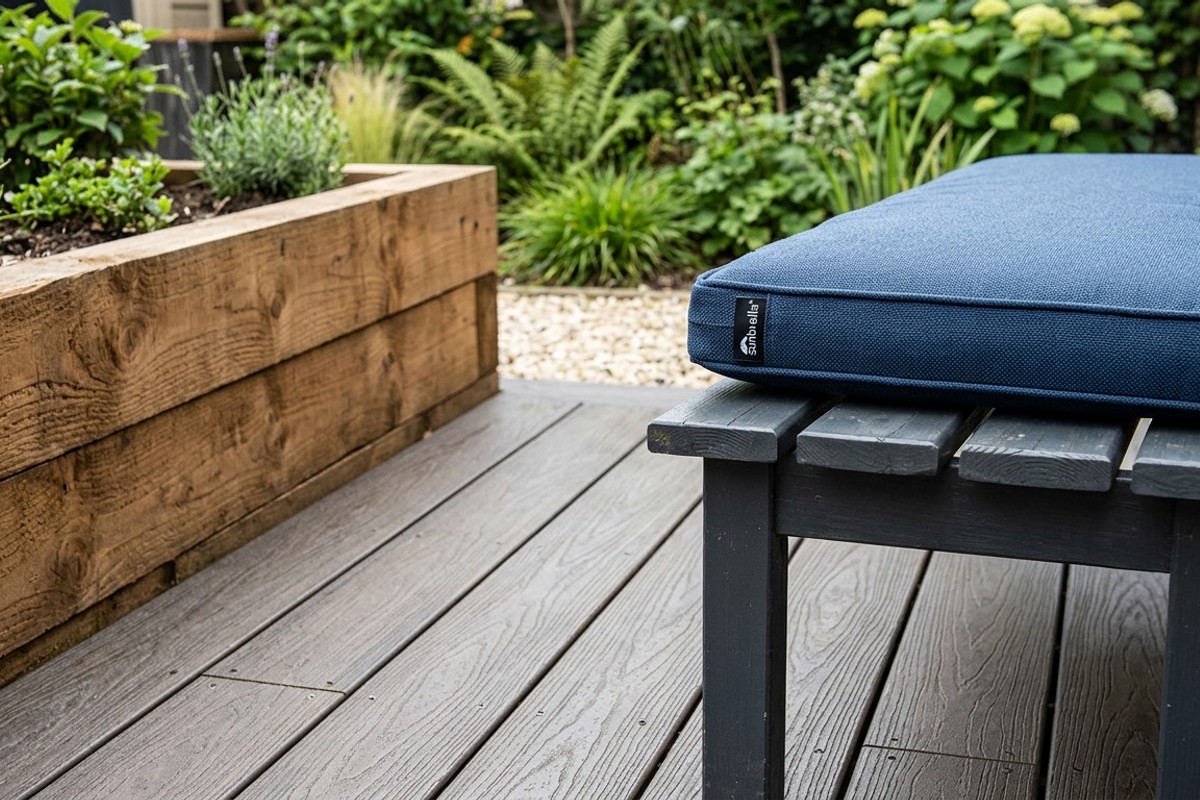
7. Select Durable, Low-Maintenance Materials
Opt for materials that can withstand enthusiastic play and require minimal upkeep. Composite decking, treated lumber, and robust outdoor fabrics are excellent choices.
Choosing durable materials means less time on maintenance and more time enjoying your beautiful, functional space with your family. Look for eco-friendly materials whenever possible to create a healthier environment.
Conclusion
Transforming your outdoor space into a safe, stimulating, and beautiful environment for your children is a rewarding endeavor. By incorporating these thoughtful child-friendly backyard design principles, you’re not just creating a yard; you’re crafting a backdrop for countless cherished memories.
Take inspiration from these kid-safe backyard ideas and start planning your ultimate family oasis today. Your little adventurers—and your peace of mind—will thank you!
Frequently Asked Questions
We hope these tips help you elevate your Backyard!
Thanks for visiting us!