Creating a truly seamless indoor-outdoor patio design is the dream for many homeowners, blurring the lines between your home’s interior and the refreshing outdoors. Have you ever wished your patio felt less like an afterthought and more like an integrated extension of your living space?
Transforming your patio into a cohesive and functional outdoor haven is entirely achievable. We’re here to share seven expert tips to help you connect your indoor and outdoor areas effortlessly, elevating both your daily living and entertaining.
1. Harmonize Your Flooring Choices
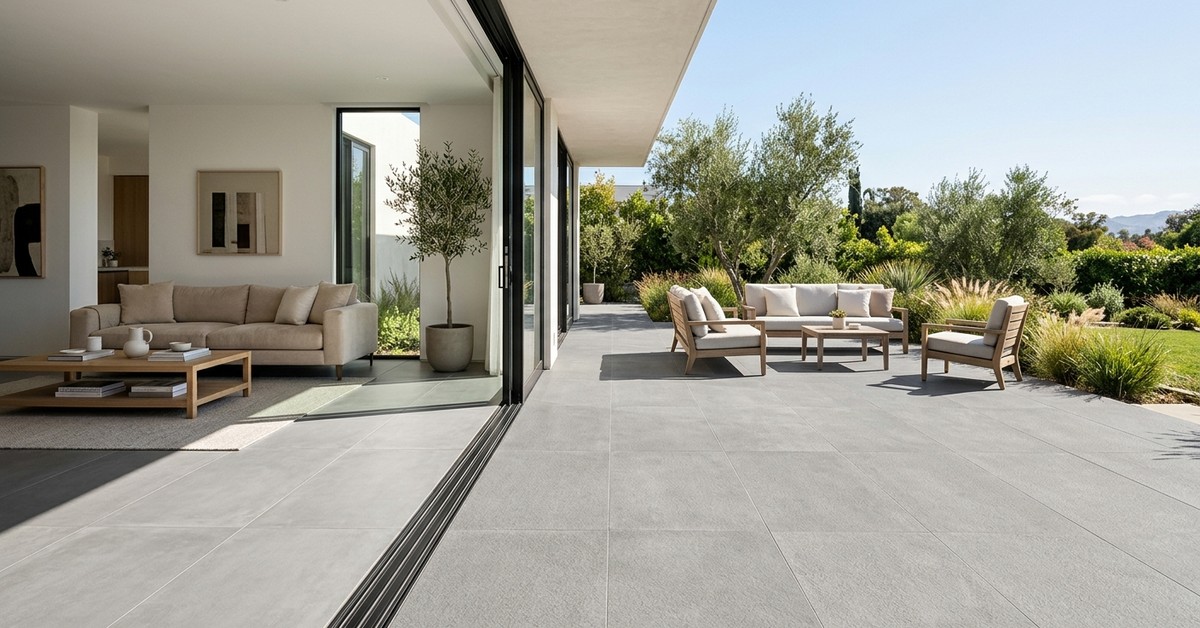
Extend the visual flow from inside out by selecting complementary or identical flooring materials. If your interior features large format porcelain tiles, consider an outdoor-rated version in a similar shade for your patio. Even a consistent color palette between interior wood floors and an exterior composite deck can create continuity.
2. Create an Outdoor Living Room with Furniture
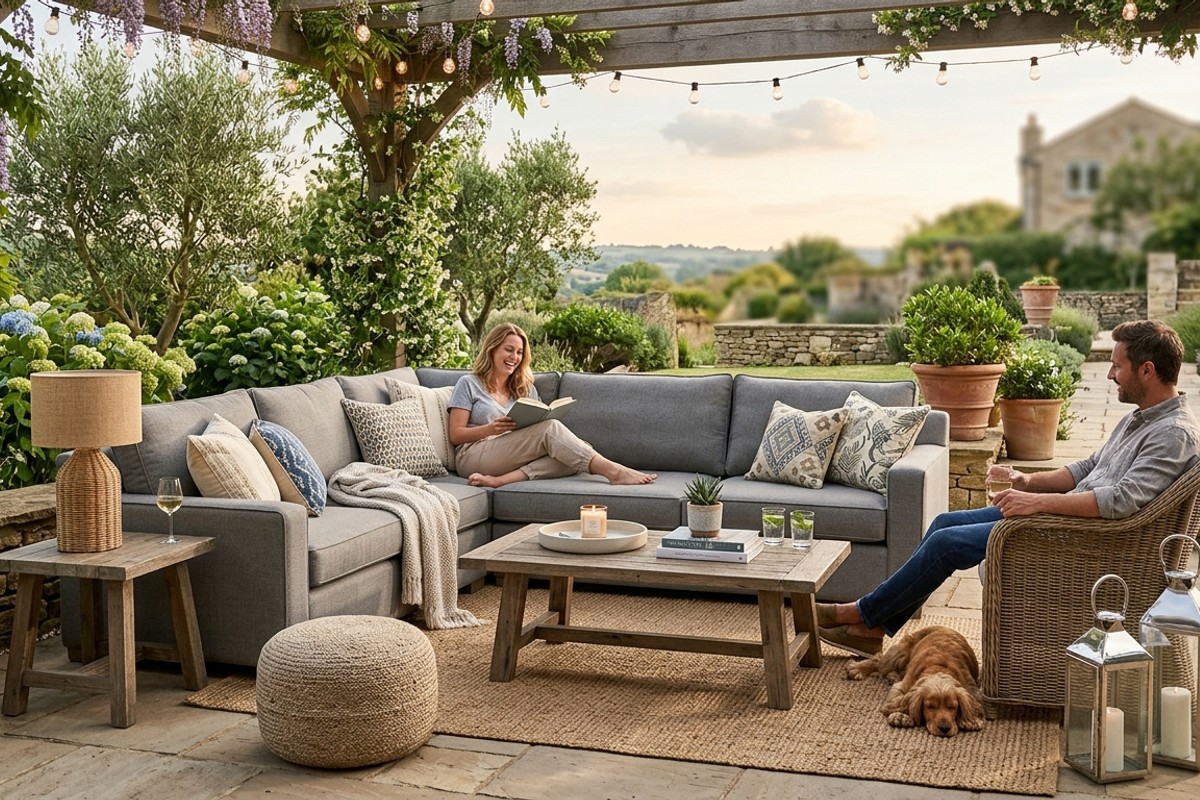
Treat your patio as an extension of your indoor living room by choosing comfortable, stylish outdoor furniture. Look for pieces that mirror the scale and style of your interior decor, perhaps a sectional sofa with deep cushions or armchairs with elegant lines. This immediately signals a functional “room” rather than just a place to sit.
3. Implement a Consistent Color Palette
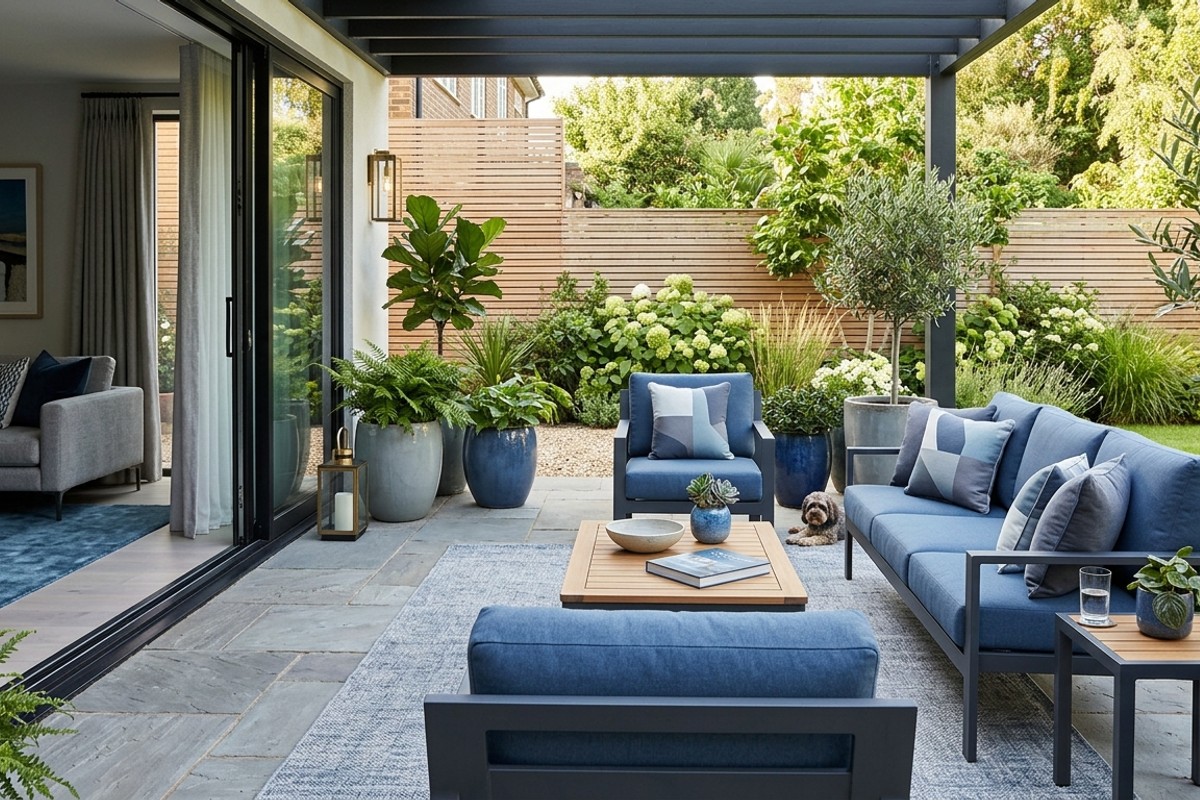
Carry your interior color scheme, or at least a subset of it, onto your patio. If your living room features cool blues and muted greys, incorporate these shades into outdoor cushions, planters, or an area rug. This visual thread instantly ties the spaces together, making the transition feel natural and intentional.
4. Use Strategic Lighting to Blur Boundaries
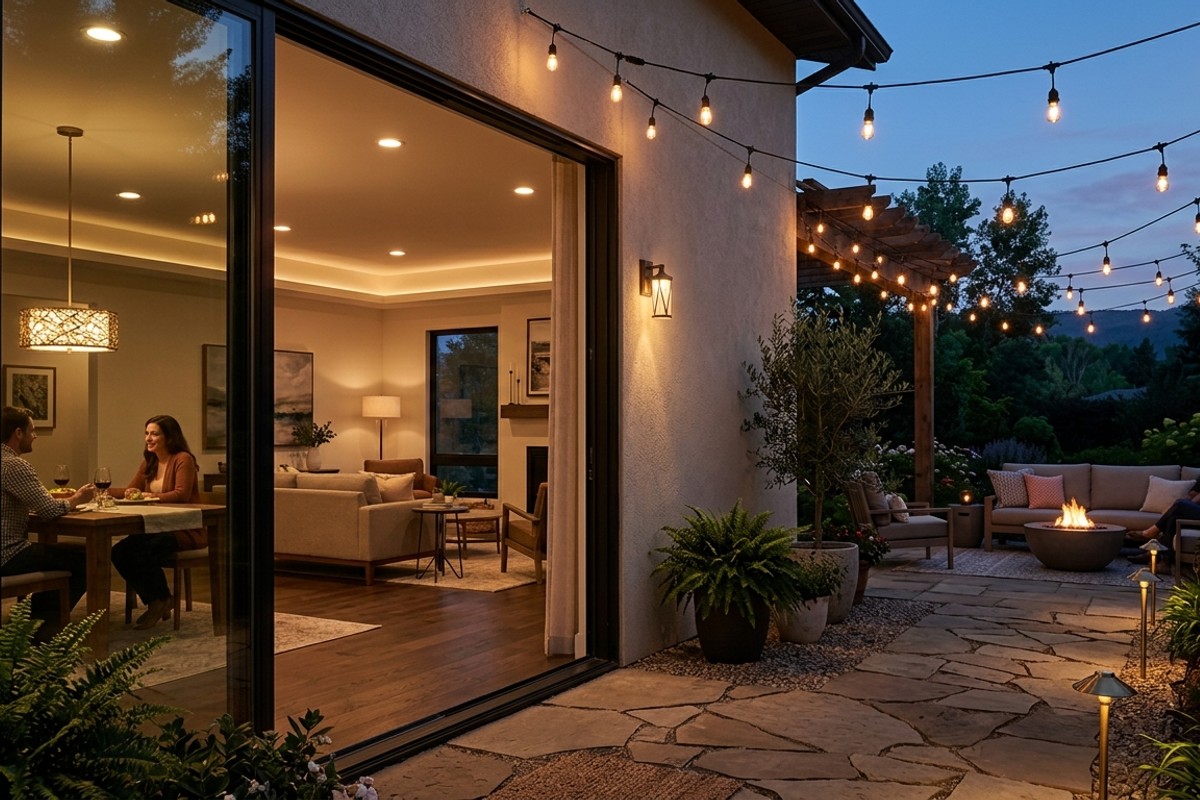
Layered lighting is key to connecting indoor and outdoor spaces, especially as evening approaches. Combine ambient string lights, functional task lighting (like path lights), and decorative sconces that echo your interior fixtures. Dimmers on both sides allow you to create a unified mood, making your outdoor living room ideas truly shine.

5. Embrace Large Openings and Transitional Doors
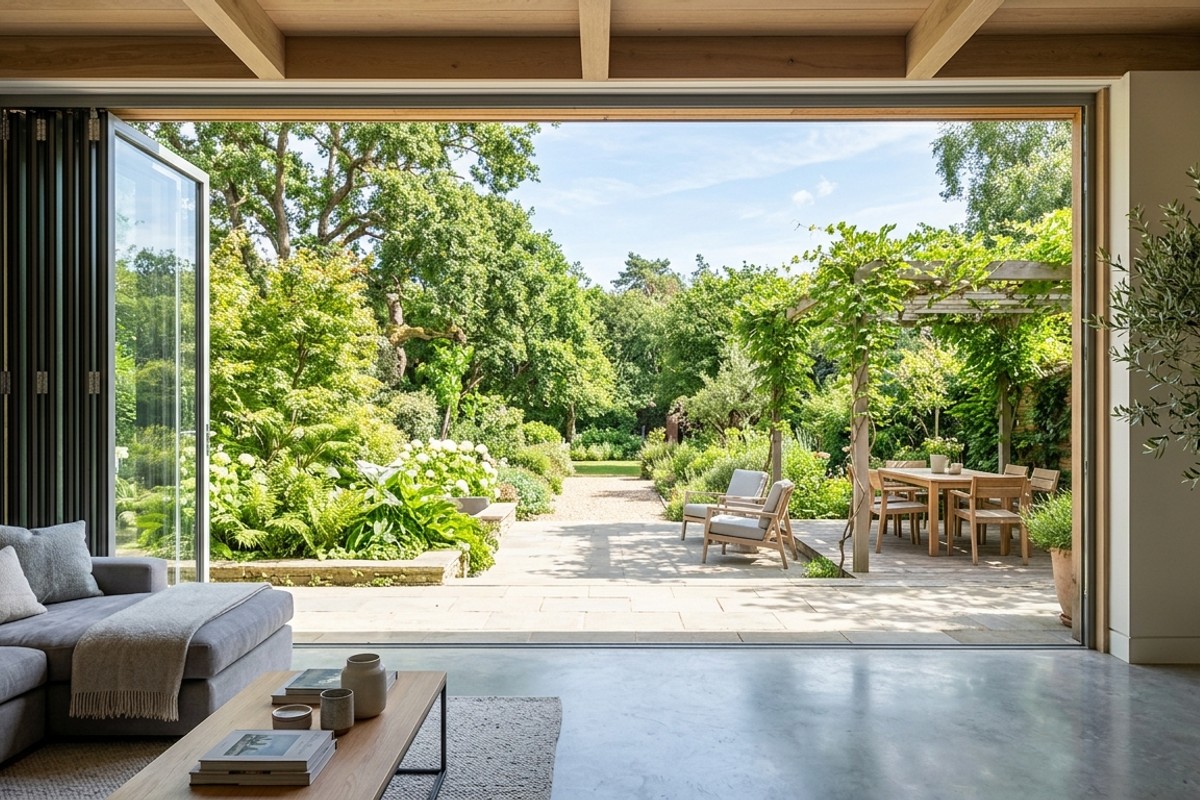
The entryway itself is crucial for an indoor-outdoor patio design. Install expansive sliding glass doors, bifold doors, or French doors that disappear or fold away to create a wide, uninterrupted opening. This physical connection immediately blurs the distinction between inside and out, inviting seamless movement.
6. Integrate Greenery and Landscaping Thoughtfully
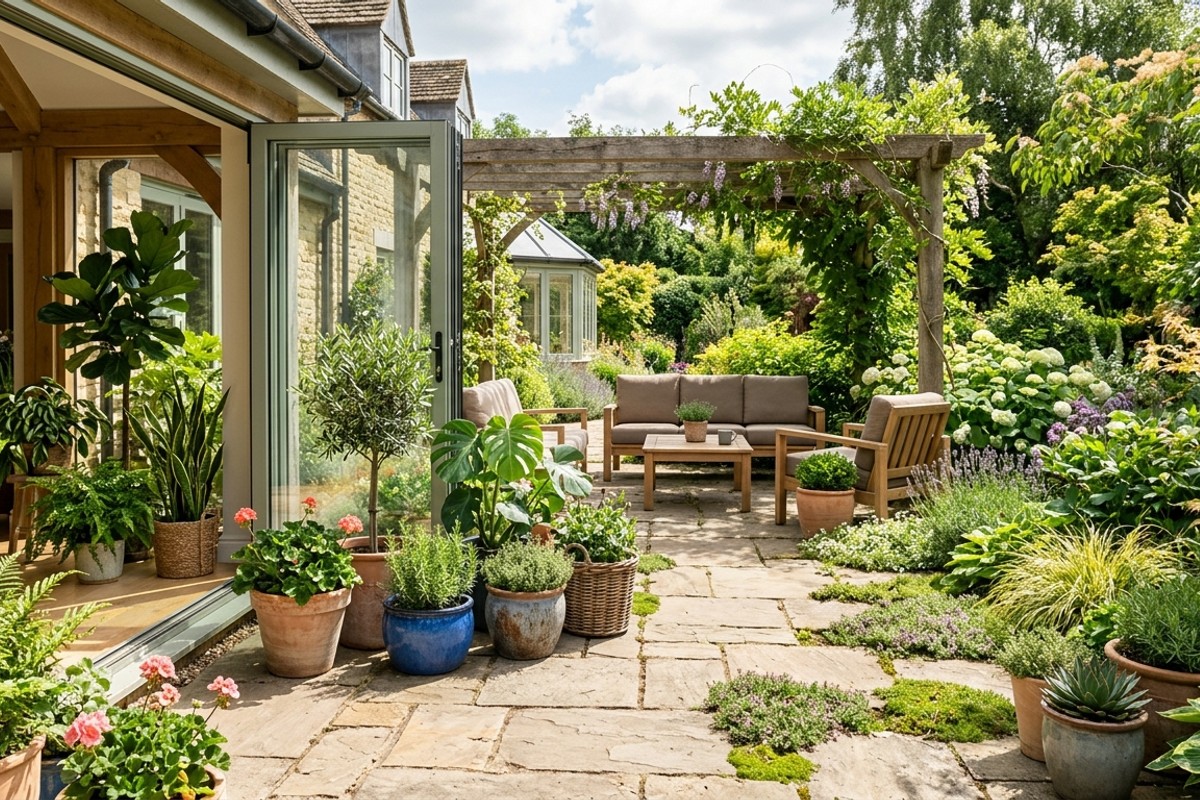
Bring potted plants onto your patio that match the style or species of your indoor plants. Furthermore, design your landscaping to flow directly into your patio area, using similar plant textures or a continuous garden bed. This natural element softens hard lines and strengthens the feeling of one expansive space.
7. Accessorize for Cohesion and Comfort
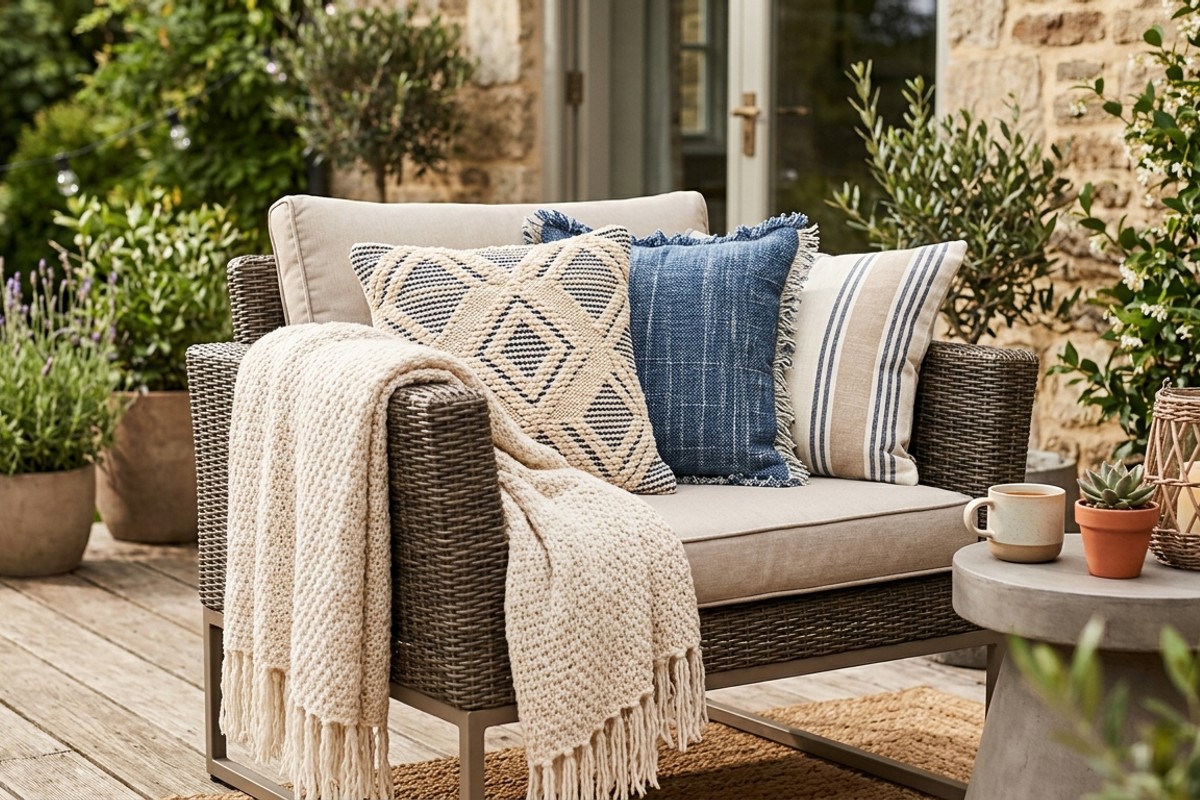
Don’t forget the finishing touches! Patio decor for seamless flow means adding outdoor-friendly accessories like decorative pillows, throw blankets, and even weather-resistant artwork. These elements personalize the space and visually link it to your home’s interior aesthetic, making it feel just as curated and cozy.
Conclusion
Achieving that coveted indoor-outdoor patio design flow transforms your home into a more expansive and enjoyable sanctuary. By thoughtfully considering flooring, furniture, color, lighting, openings, greenery, and accessories, you can create a truly cohesive environment. Step outside and let your interior design extend into the beautiful open air.
Frequently Asked Questions
We hope these tips help you elevate your Patio!
Thanks for visiting us!