Infusing your home with a sophisticated, enduring charm is effortlessly achieved with a well-curated approach to mid-century modern interior design. This iconic aesthetic, born from a period of optimism and innovation, continues to inspire designers and homeowners alike with its functional beauty and clean lines.
From the instantly recognizable silhouettes of MCM furniture to the thoughtfully selected color palettes and innovative lighting, we’ll guide you through nine timeless retro design ideas. Get ready to explore how these elements can transform your modern living space into a haven of style and comfort.
1. Iconic Furniture Silhouettes
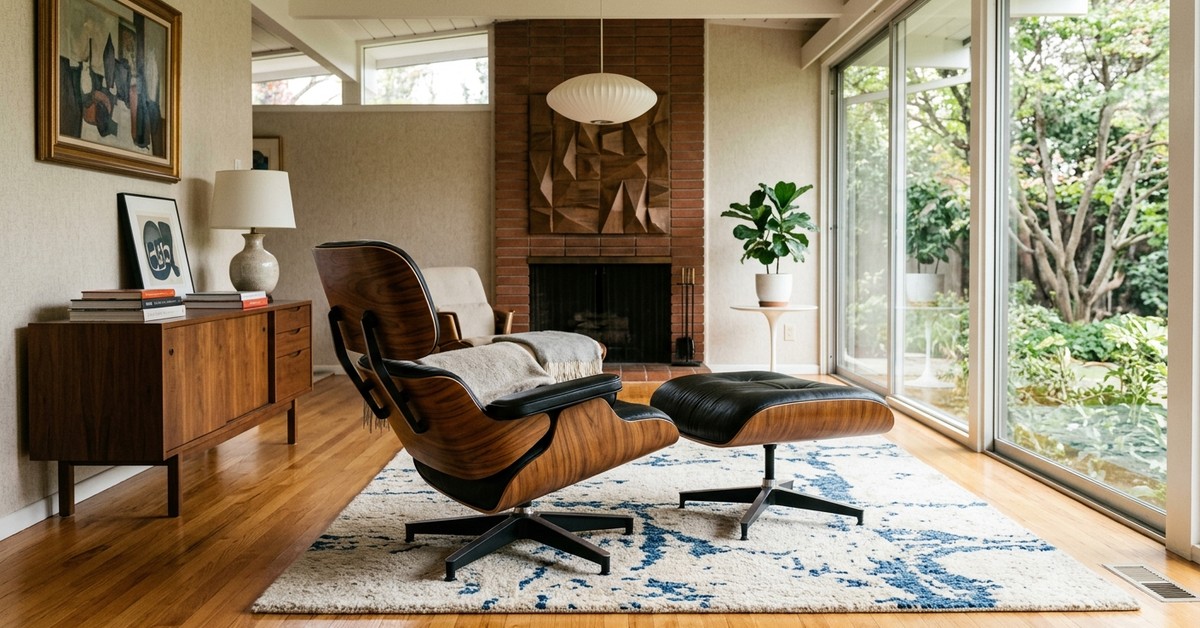
At the heart of mid-century modern design are its unforgettable furniture pieces. Think of the sweeping curves of an Eames Lounge Chair or the elegant simplicity of a Noguchi coffee table. These aren’t just furnishings; they are sculptural statements crafted from materials like molded plywood, supple leather, and polished chrome.
Investing in authentic or high-quality reproductions of these MCM furniture icons instantly elevates your space. Look for pieces that showcase exposed wood grains, clean upholstery, and a sense of lightness, often lifted on slender tapered legs. They embody both comfort and groundbreaking design.
Each piece is designed to be functional yet strikingly beautiful, embodying the era’s focus on form following function. Consider a Saarinen Tulip table paired with matching chairs to create a cohesive and sophisticated dining area.
2. Organic Forms and Natural Materials
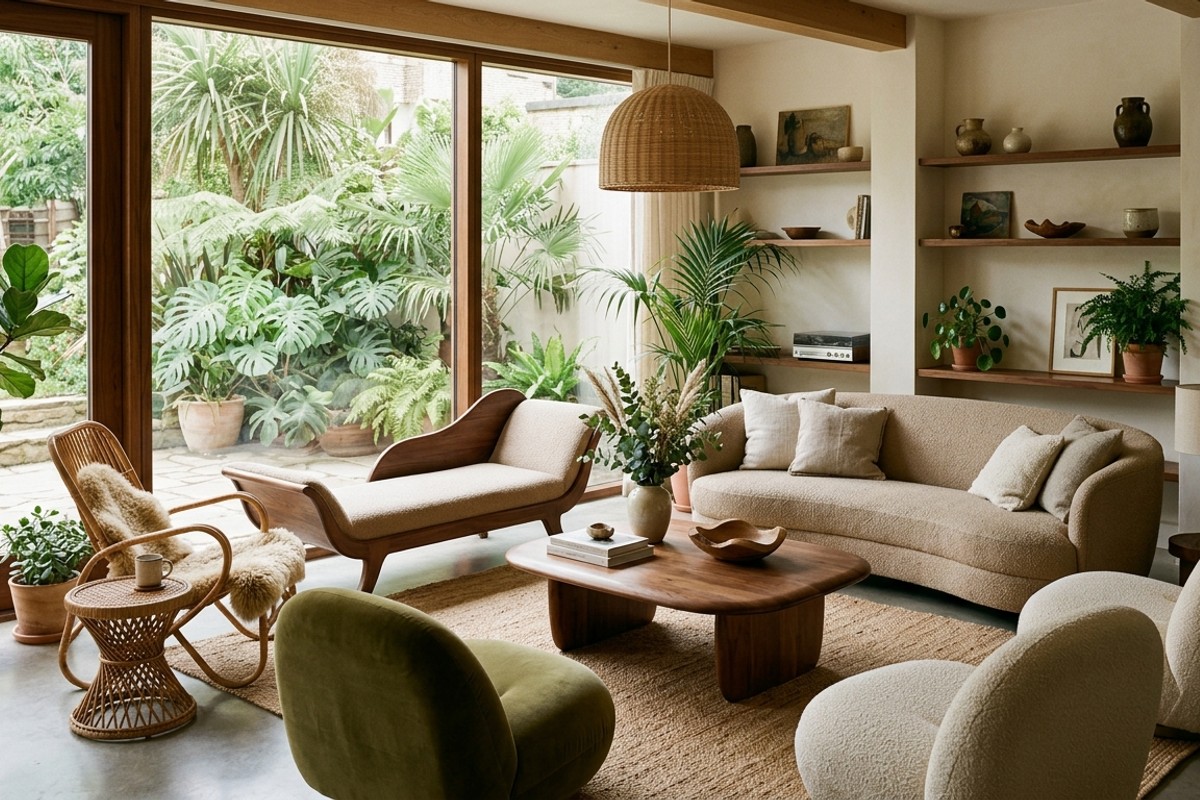
Mid-century modern interiors embrace nature’s beauty through organic forms and natural materials. Rich woods like teak, walnut, and rosewood are fundamental, used in everything from credenzas to wall paneling. These materials bring warmth and texture to sleek spaces.
Look for furniture with soft, biomorphic shapes—curved sofas, rounded edges on tables, and sculptural chairs that mimic natural contours. These elements soften the geometric precision often found in the architecture, creating a harmonious balance.
Incorporating natural elements like rattan, wicker, and linen textiles further enhances this connection to the outdoors. These materials add an approachable, tactile quality to your mid-century modern decor, inviting you to relax and unwind.
3. The Power of a Distinctive Color Palette
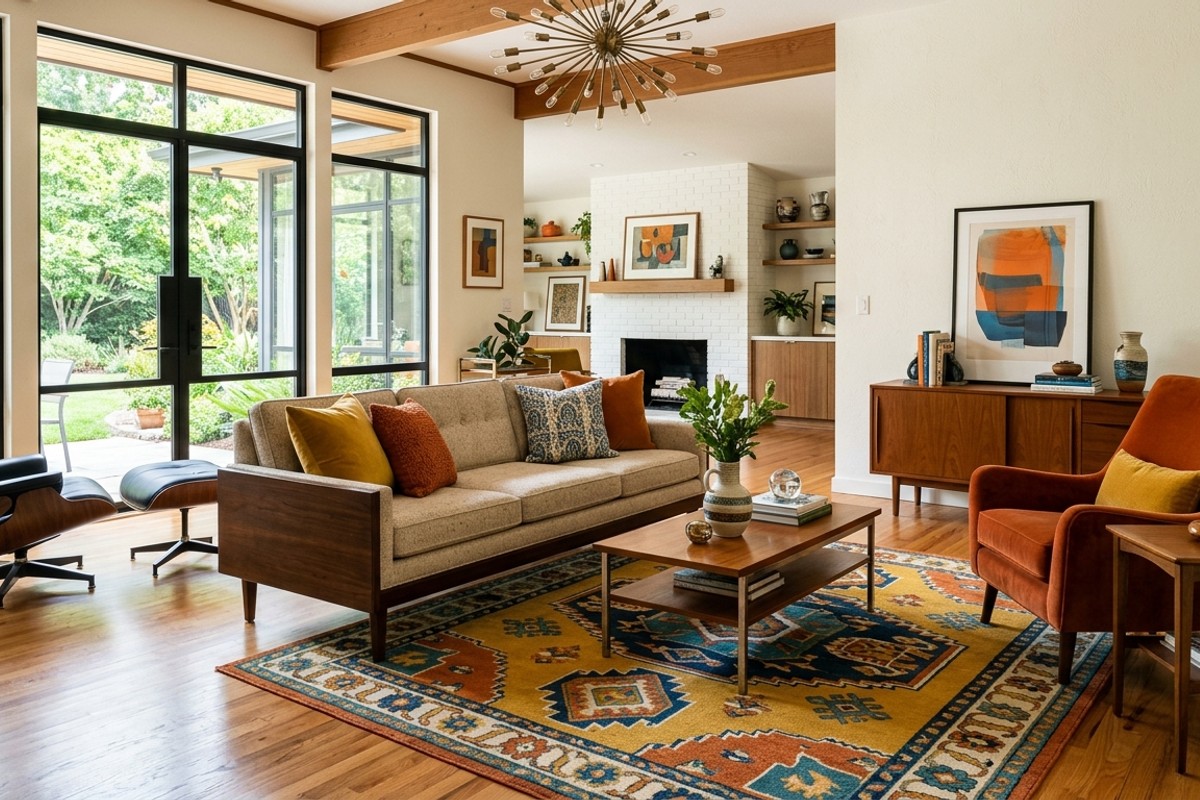
A key characteristic of mid-century modern interior design is its distinctive color palette. Beyond the neutrals, the era celebrated vibrant, earthy tones that bring life and personality to a room. Think mustard yellow, avocado green, burnt orange, and deep teal.
These colors are often used as thoughtful accents rather than overwhelming schemes. A single statement wall, a bold rug, or a collection of throw pillows can introduce these hues beautifully. They create a playful yet sophisticated atmosphere.
Pairing these bolder colors with warm neutrals like beige, charcoal, or off-white ensures the space remains grounded and timeless. This balance allows the vibrant elements to truly pop without feeling dated, offering a perfect blend of retro design ideas and contemporary appeal.
4. Statement Lighting Fixtures
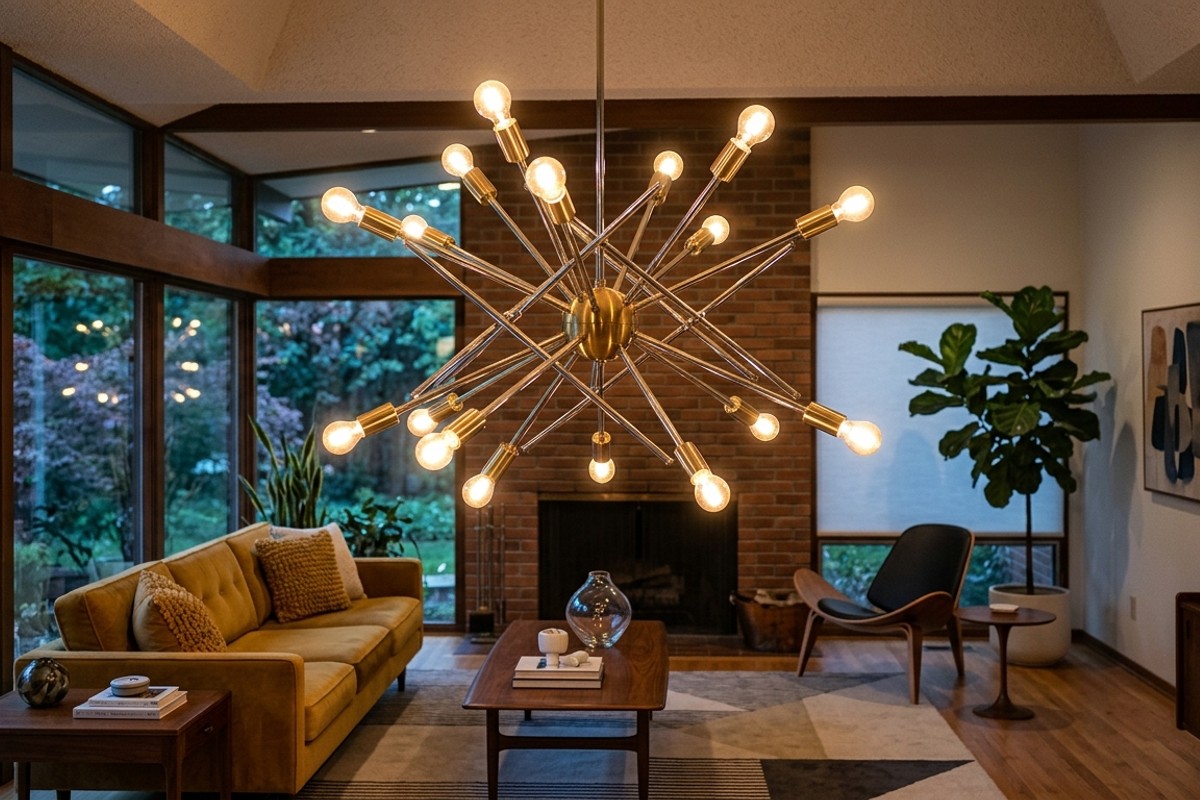
Lighting in mid-century modern design is rarely just functional; it’s a form of art. Iconic fixtures serve as stunning focal points, casting a warm glow while adding architectural interest. Think Sputnik chandeliers, Arco floor lamps, or the delicate George Nelson bubble lamps.
Materials like polished brass, chrome, and frosted or colored glass are prevalent. These fixtures often feature sculptural forms, radiating spokes, or geometric patterns that command attention and elevate the entire modern living space design.
Strategically placed, these statement pieces not only illuminate a room but also define zones and highlight other design elements. A well-chosen lamp can transform the mood and perception of an entire area, bringing warmth and elegance.
5. Integrating Indoor-Outdoor Flow
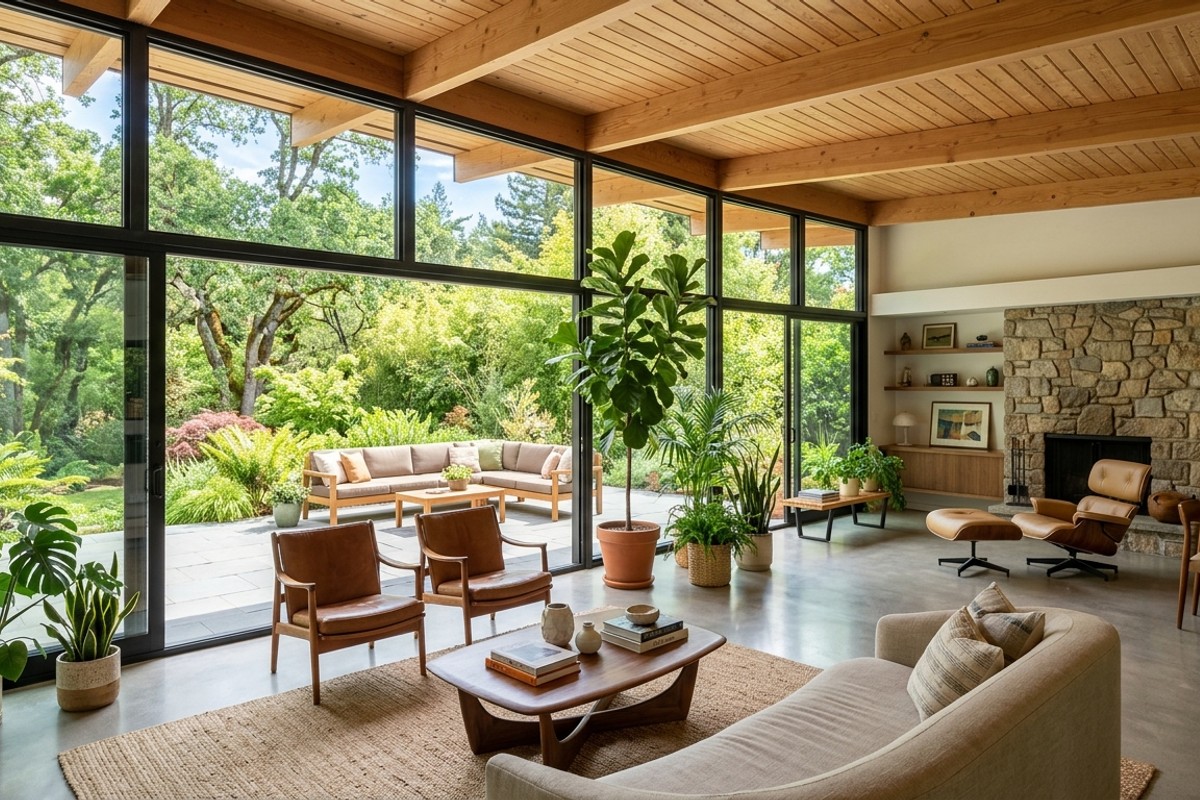
One of the most revolutionary aspects of mid-century modern architecture was its emphasis on blurring the lines between indoor and outdoor spaces. This philosophy translates beautifully into interior design, creating a sense of openness and tranquility.
Large windows, sliding glass doors, and thoughtful placement of seating areas near natural light sources are crucial. Extend your living space visually by ensuring exterior views are unobstructed and inviting. This creates a serene, expansive feeling.
Incorporating potted plants, indoor trees, and even small interior courtyards further integrates nature into your home. Using similar flooring materials inside and out can also create a seamless transition, truly embodying a timeless interior design principle.

6. Geometric Patterns and Textures
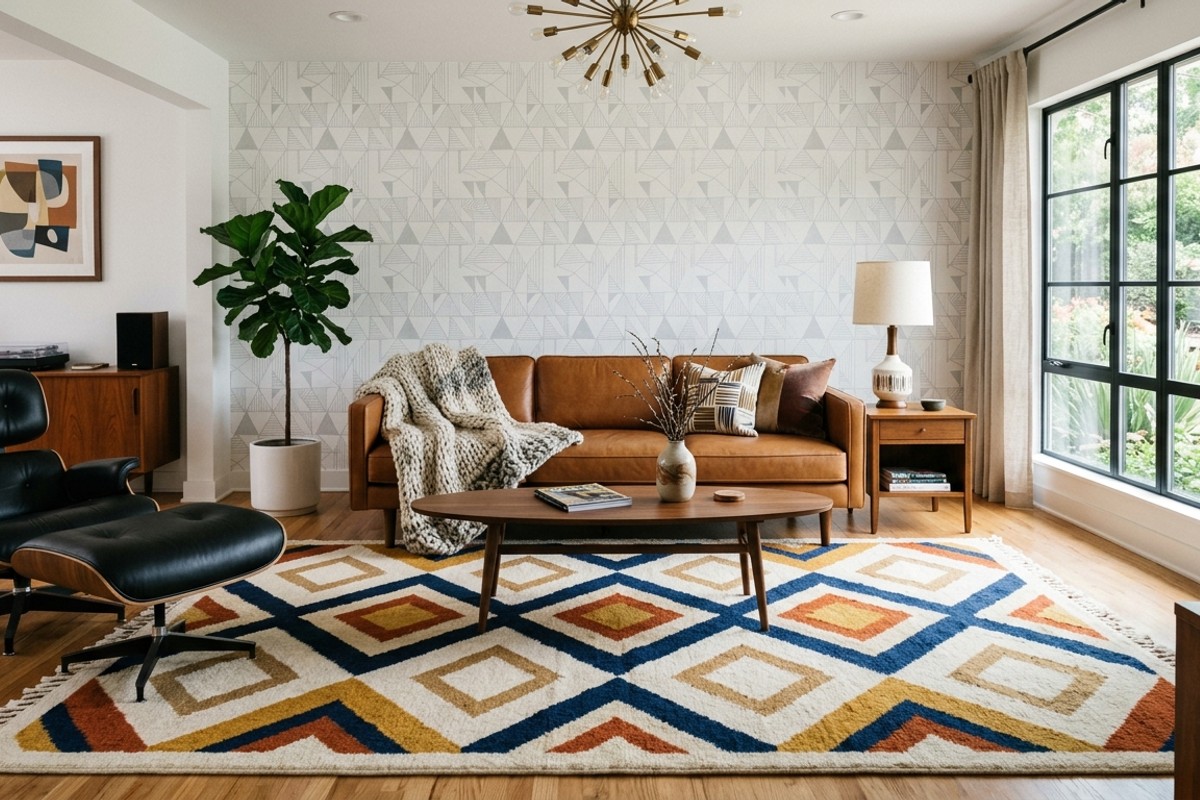
Geometric patterns and varied textures add depth and visual interest to mid-century modern decor. Abstract art, graphic rugs, and patterned textiles often feature bold, clean lines, circles, and atomic starburst motifs. These inject personality without sacrificing sophistication.
Consider a rug with a repeating diamond or chevron pattern to anchor your living room. Wallpapers with subtle geometric prints can add a sophisticated backdrop, complementing the simplicity of your MCM furniture.
Balance these patterns with a mix of textures: a rough wool throw over a smooth leather sofa, or a rattan accent chair next to a sleek walnut cabinet. This interplay prevents the space from feeling flat and adds a touch of playful retro design.
7. Minimalist Approach to Clutter
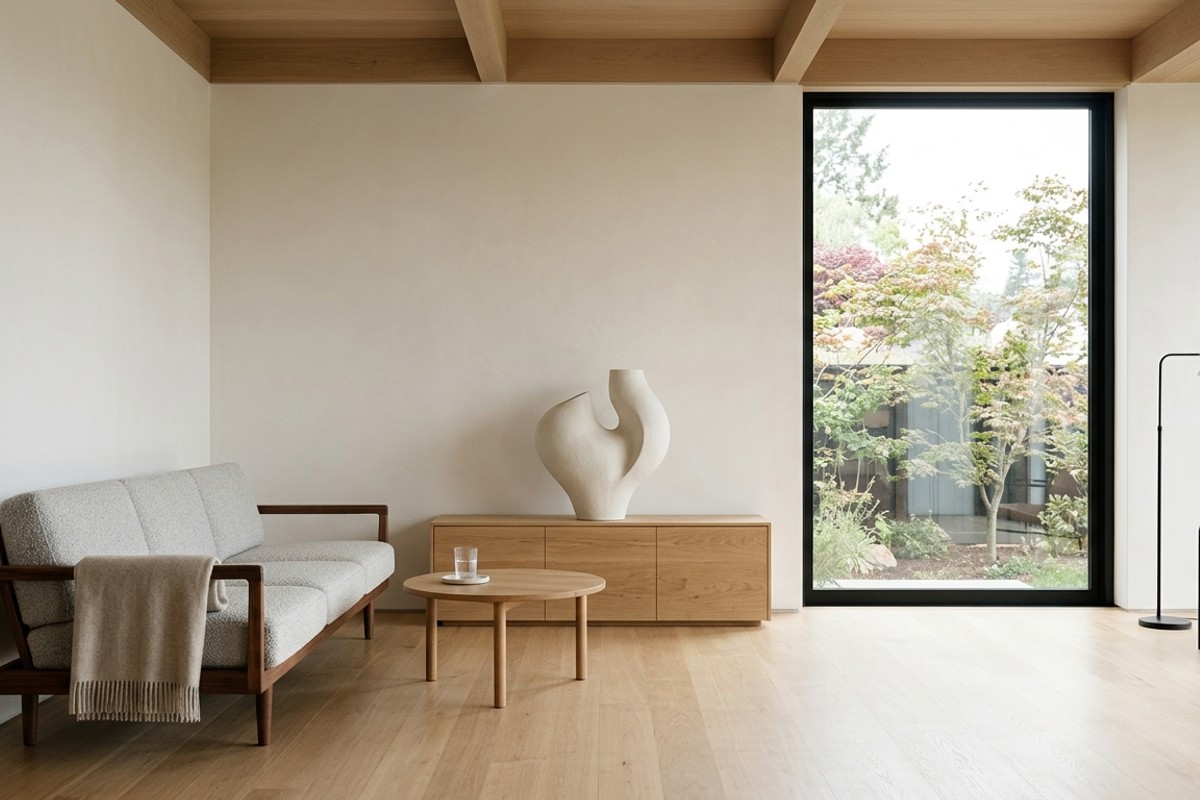
A fundamental principle of mid-century modern interior design is “less is more.” This doesn’t mean sparse, but rather a thoughtful, curated approach to possessions. Each item should have a purpose or be a statement piece, contributing to the overall aesthetic.
Embrace clean lines and open spaces by decluttering mercilessly. Surfaces should feel clear and uncluttered, allowing key design elements to shine. This creates a sense of calm and order, a hallmark of modernist living.
Focus on intentional placement of decor. A single, well-chosen piece of art or a sculptural vase can make a far greater impact than a multitude of smaller items. This minimalist philosophy enhances the impact of your MCM furniture and decor.
8. Sleek Storage Solutions
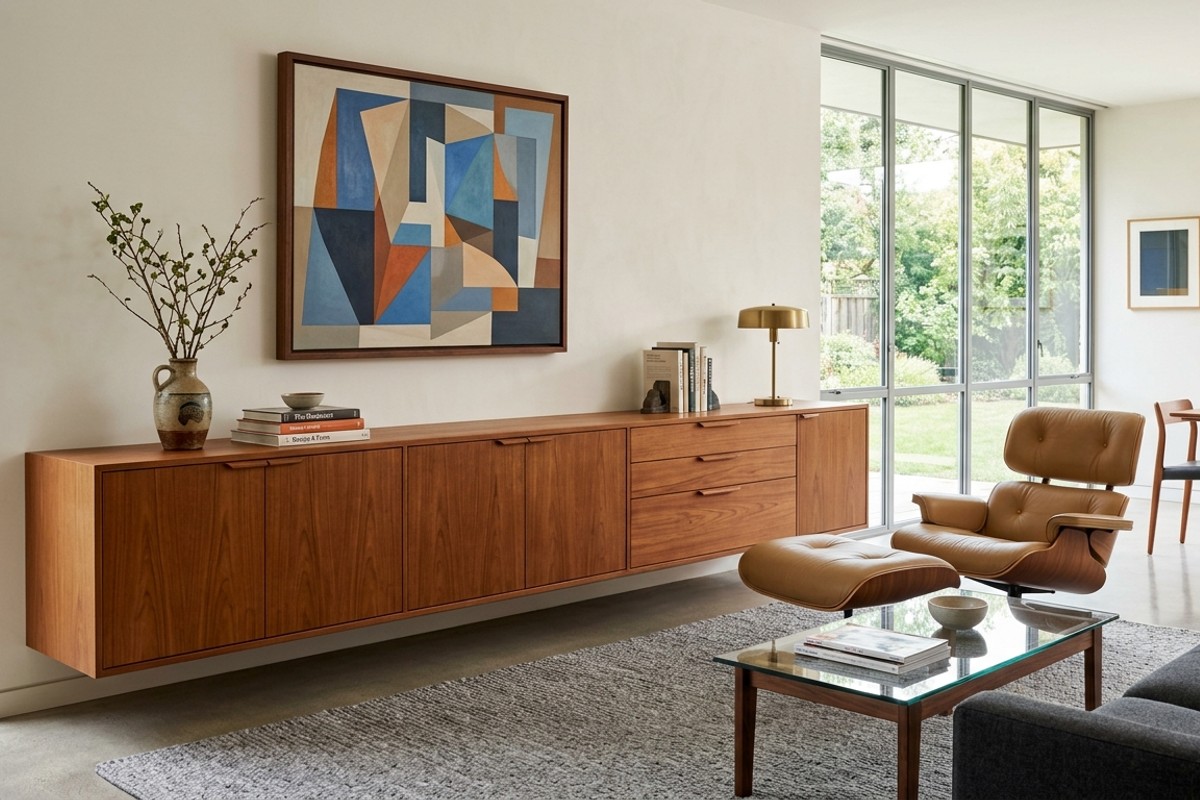
Mid-century modern homes are masters of elegant, integrated storage. Credenzas, sideboards, and low-slung media consoles are not just functional; they are beautiful pieces of furniture themselves, often crafted from rich walnut or teak.
Look for pieces with clean lines, flush doors, and integrated handles that maintain a seamless façade. Built-in cabinetry can also provide ample storage that blends effortlessly into the architecture, keeping clutter out of sight.
These storage solutions are designed to be both practical and aesthetically pleasing, reinforcing the minimalist approach. They help maintain the airy, open feel characteristic of a sophisticated modern living space design.
9. Art as a Focal Point
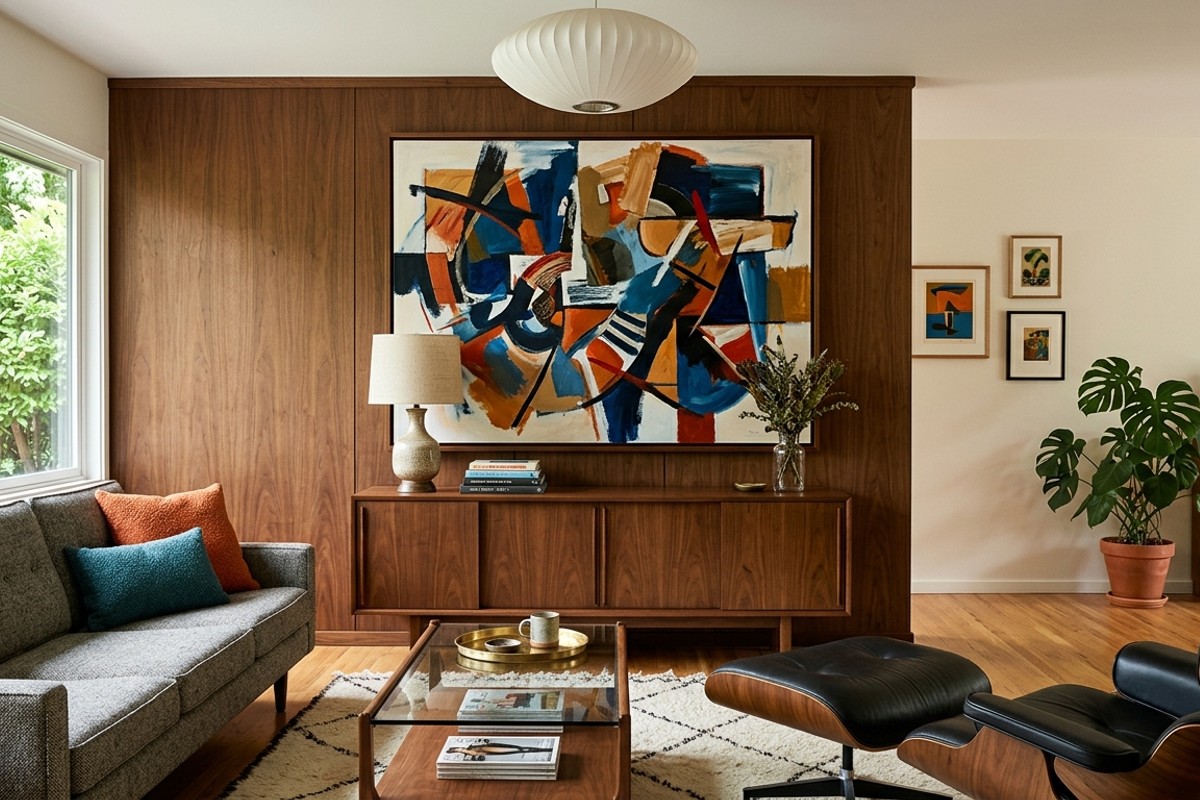
In mid-century modern interiors, art often serves as a powerful focal point, adding color, texture, and a personal touch. Abstract expressionist paintings, graphic prints, or large-scale photographic pieces are all excellent choices.
Look for art that features bold colors, geometric shapes, or organic abstractions, echoing the themes found throughout the design. A single, commanding piece can anchor a wall, drawing the eye and setting the tone for the room.
Consider framed vintage posters or advertising art from the mid-century era for an authentic retro design touch. Art should feel integrated into the space, complementing your MCM furniture and expressing your unique style.
Final Thoughts
Embracing mid-century modern interior design is about more than just aesthetics; it’s about creating a timeless living space that balances functionality, beauty, and comfort. We hope these nine ideas have sparked inspiration for your next home transformation.
Which of these retro design ideas resonates most with your personal style? Let us know which elements you’re most excited to incorporate into your modern living space!
Frequently Asked Questions
We hope you found your next Interior Design inspiration!
Thanks for visiting us!