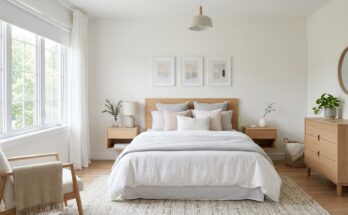
Transforming your personal oasis with thoughtful, calming bedroom designs is a powerful step towards truly restorative sleep. Imagine stepping into a space that immediately quiets your mind and eases your body, preparing you for deep, uninterrupted rest. This isn’t just about aesthetics; it’s about crafting an environment engineered for optimal sleep quality.
We’ve curated ten inspiring bedroom ideas for sleep, ranging from soothing color palettes and natural textures to mindful lighting and decluttering strategies. Discover how to create a tranquil sanctuary that nurtures peaceful bedroom decor and promotes profound well-being every single night.
1. Monochromatic Harmony
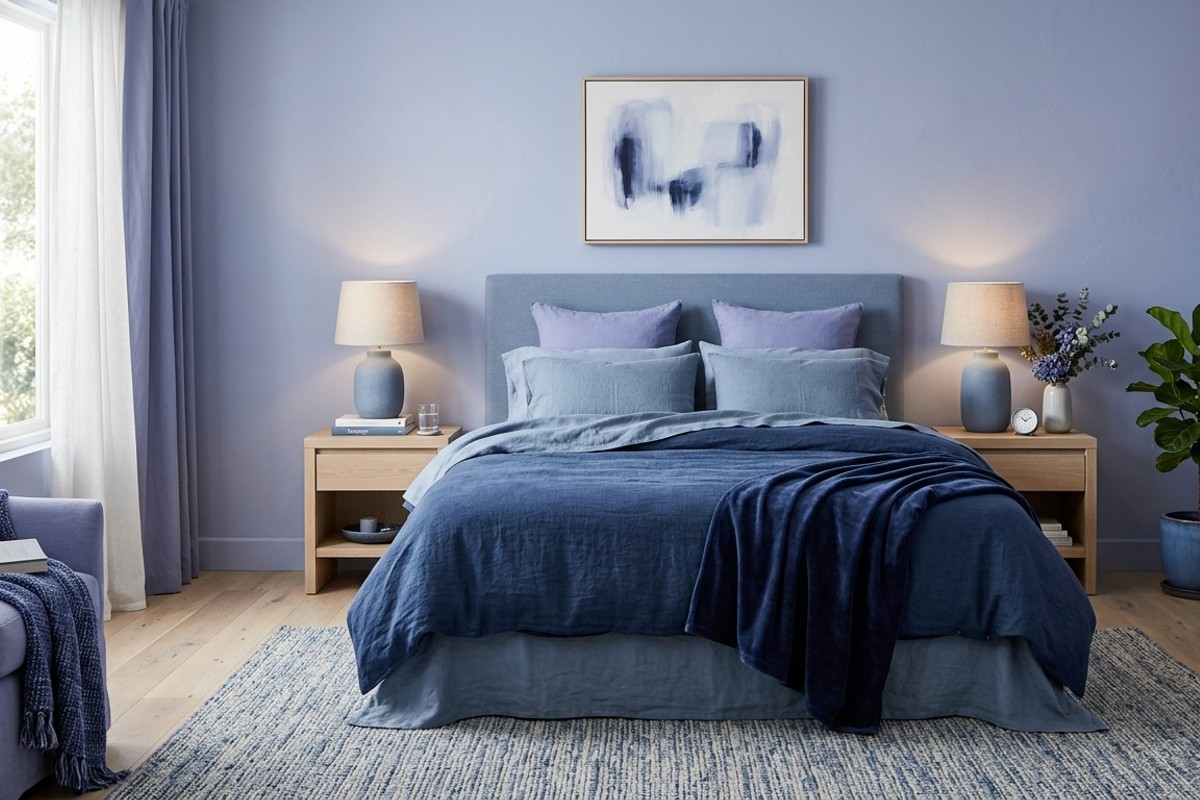
Embrace the serene power of a single color family, utilizing varying shades and tones to create depth without visual clutter. Think cool blues or soft sages, layered from walls to bedding. This approach fosters a cohesive, restful bedroom design, eliminating jarring contrasts that can stimulate your senses.
For instance, paint walls in a muted periwinkle like Farrow & Ball’s ‘Borrowed Light,’ then layer your bed with dusty blue linen sheets and a deeper indigo throw. The subtle shifts in hue create a sophisticated, sleep-promoting bedroom environment. Matte ceramic lamps and soft white oak furniture complete this tranquil picture.
2. Biophilic Bliss
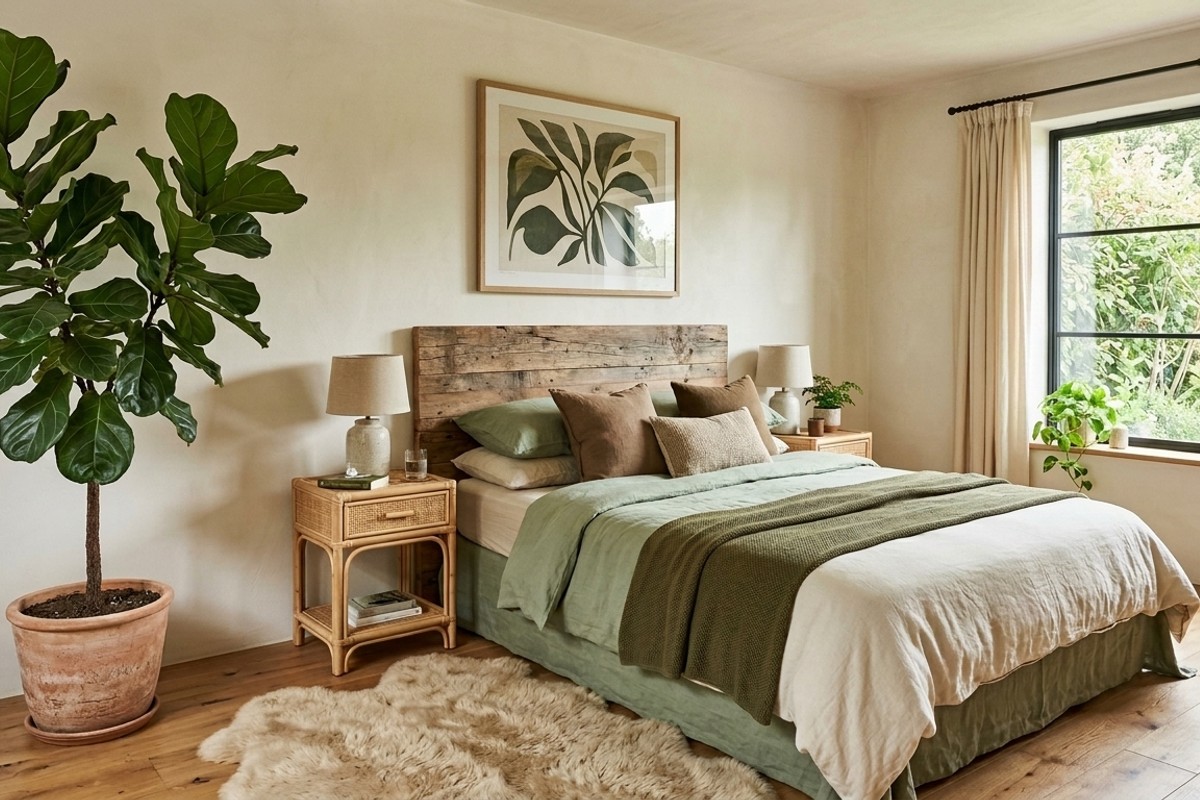
Connect with nature indoors to calm your nervous system and enhance relaxation. Introduce live plants, such as a large fiddle-leaf fig or smaller snake plants, known for improving air quality. Incorporate natural materials like a reclaimed wood headboard or rattan bedside tables.
This design style brings the tranquility of the outdoors into your personal space. Soft greens and earthy browns in your textiles will reinforce this natural connection. Consider a sheepskin rug for a touch of organic luxury underfoot, contributing to a stress-free bedroom.
3. Textural Cocooning
Layering a variety of soft, inviting textures is key to creating a truly cozy and calming bedroom design. Think plush bouclé throws draped over the bed, paired with organic cotton sheets and a chunky knit blanket. A deep-pile wool rug softens the floor and absorbs sound.
Tactile elements invite you to unwind and feel secure, signaling to your body it’s time to rest. Integrate velvet cushions or a upholstered headboard for added softness and visual warmth. These comforting layers are essential bedroom ideas for sleep, making your bed an irresistible haven.

4. Soft Illumination Retreat
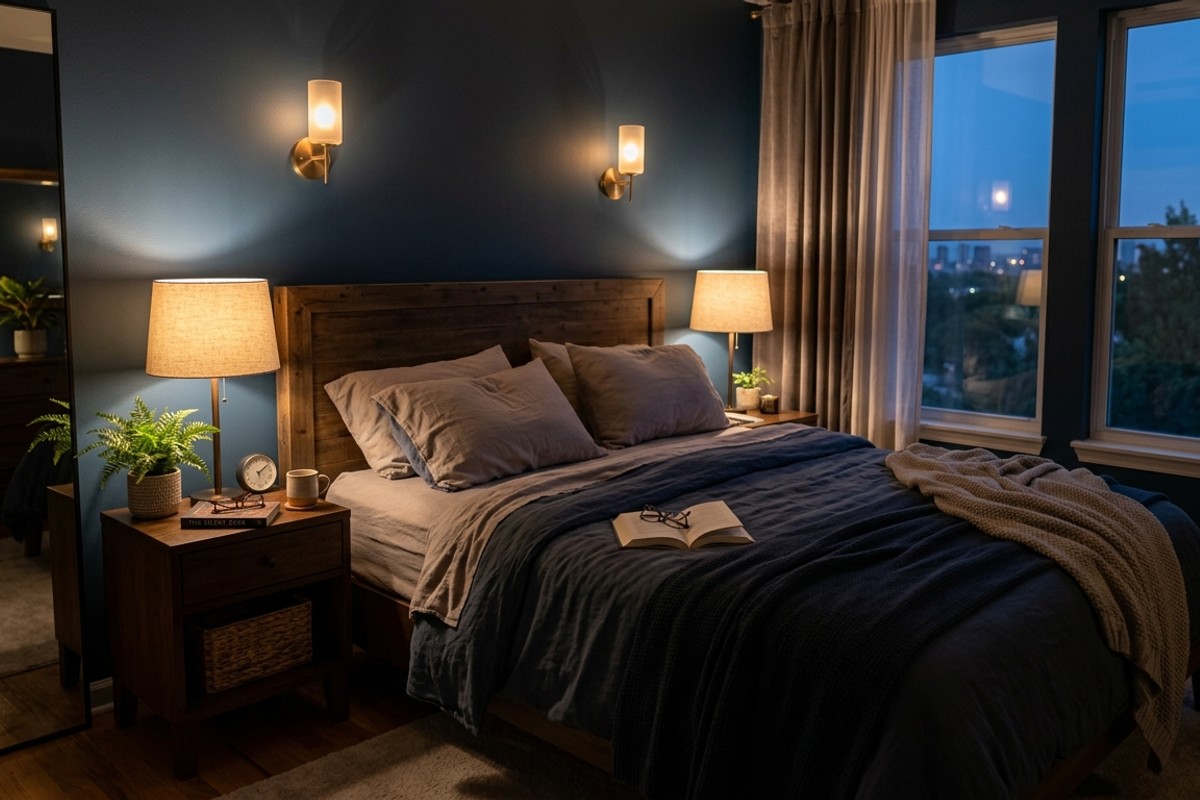
Mindful lighting is paramount for a peaceful bedroom decor. Ditch harsh overhead lights and instead opt for multiple sources of warm, dimmable illumination. Bedside lamps with fabric shades cast a gentle glow, perfect for pre-sleep reading.
Install smart dimmers on all light fixtures to gradually reduce brightness as bedtime approaches. Consider adding a small, low-wattage accent lamp or wall sconces for ambient light. This soft illumination signals to your body that it’s time to wind down, promoting better sleep quality.
5. Minimalist Sanctuary
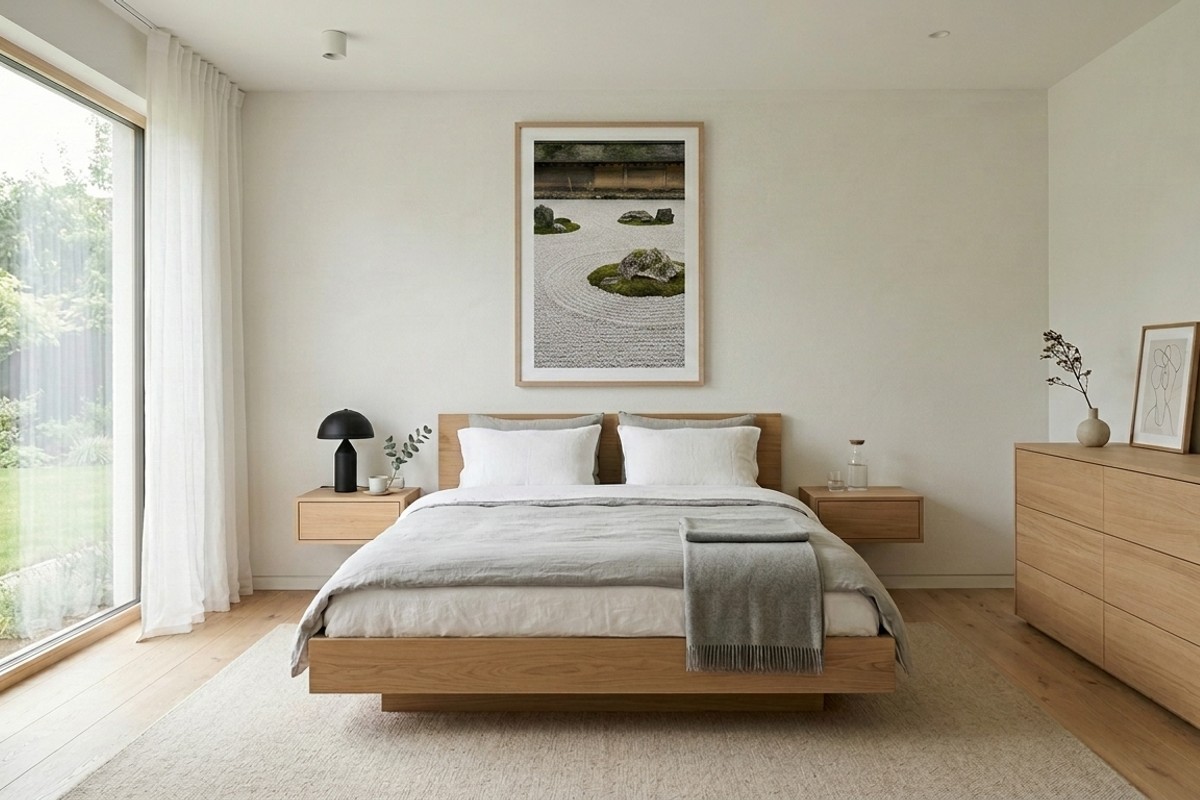
A decluttered space is a decluttered mind, making minimalist design a top choice for calming bedroom designs. Focus on essential furnishings with clean lines and a simple aesthetic. Choose a platform bed, a sleek dresser, and only necessary bedside items.
Remove any non-essential items that can cause visual distraction or mental clutter. Storage solutions, like under-bed drawers or built-in closets, keep surfaces clear and serene. This creates a deeply restful environment, free from daily stressors, embodying a true stress-free bedroom.
6. Earthy Tones & Natural Materials
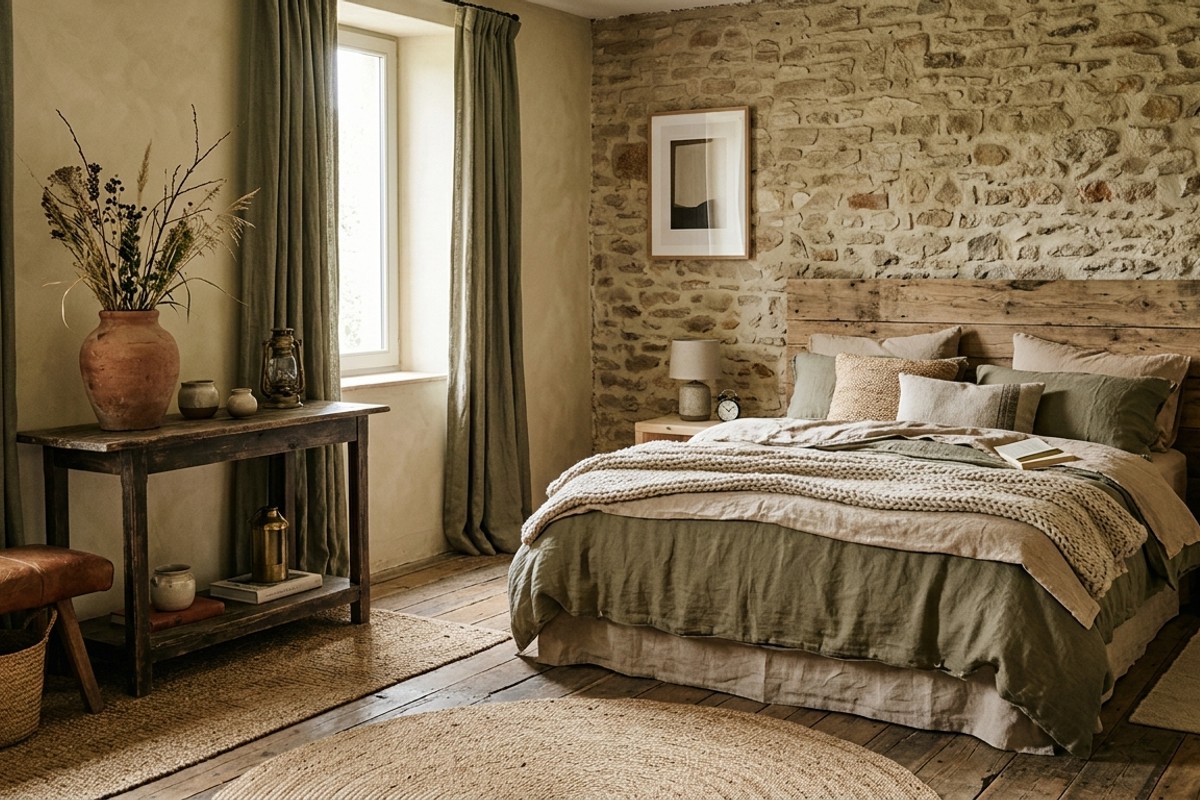
Ground your sleep space with a palette inspired by the natural world, using colors like terracotta, sage green, sandy beige, and creamy whites. These hues provide a sense of stability and warmth. Pair them with raw materials such as unfished wood, woven jute, and exposed stone textures.

This design evokes a primal sense of calm and connection to the earth, making it an excellent choice for a sleep-promoting bedroom. A chunky terracotta vase on a distressed wood console or linen curtains in a muted olive create a serene, grounding atmosphere that encourages deep relaxation.
7. Sound-Absorbing Serenity
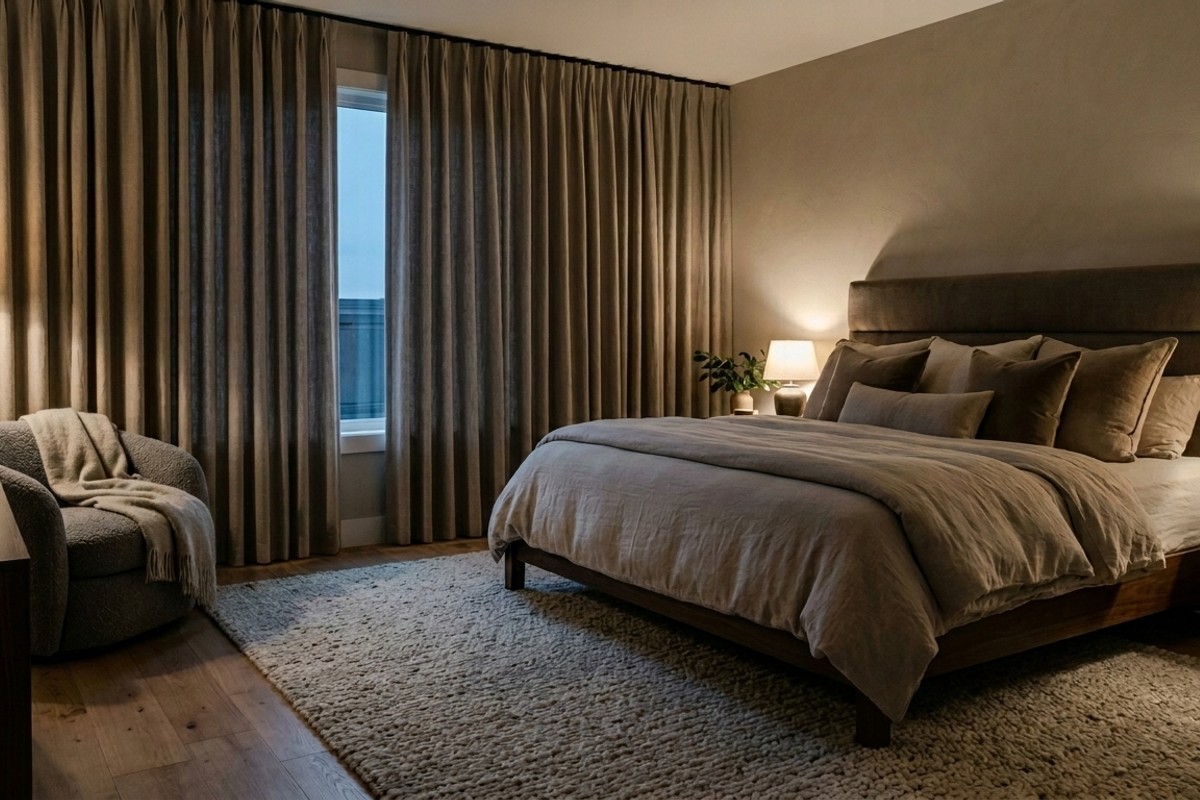
Minimize external noise disruptions by incorporating elements that absorb sound. Heavy, lined curtains are not only elegant but also excellent for blocking light and muffling street sounds. A large area rug, especially one with a thick pile, helps dampen echoes and soften footsteps.
Consider upholstered furniture, like a plush headboard or an accent chair, which also contributes to sound absorption. These elements create a quiet, insulated cocoon, essential for a restful bedroom design. This thoughtful approach ensures your space is a true haven of tranquility, blocking out the world’s din.
8. Aromatic Atmosphere
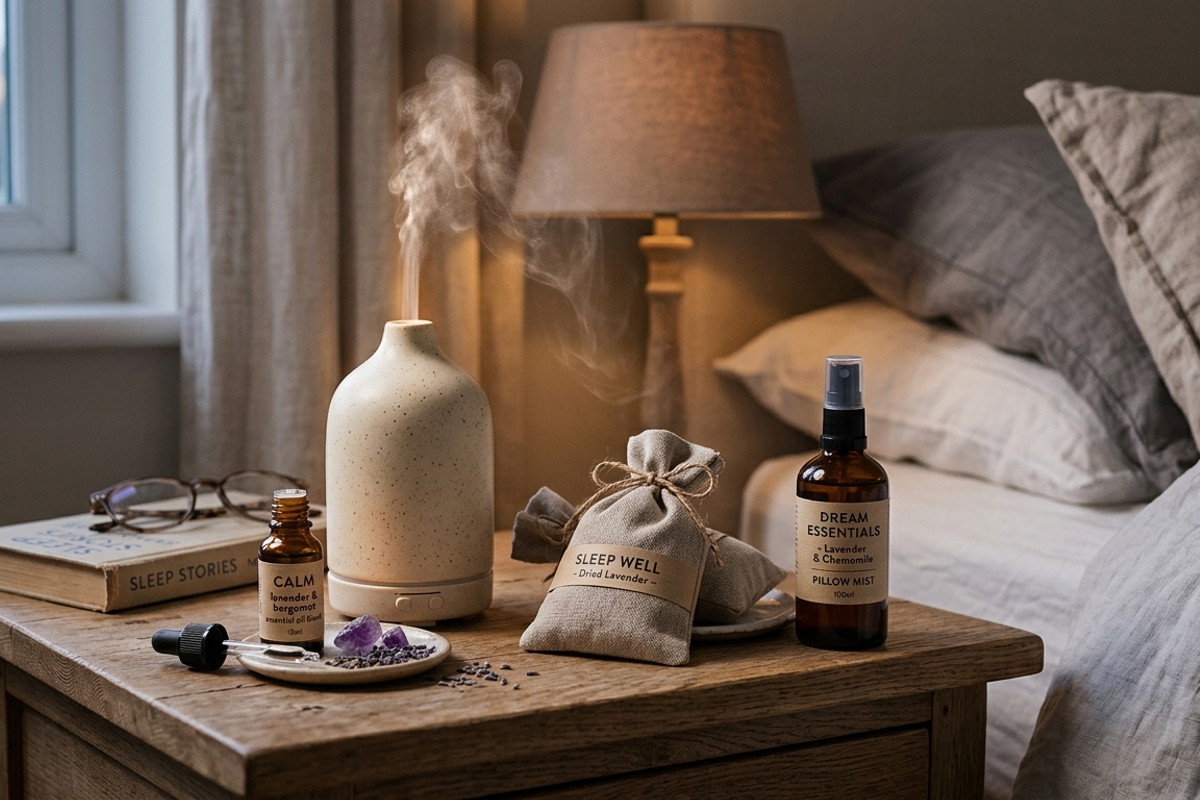
Engage your sense of smell to promote relaxation and deeper sleep. Integrate natural scents known for their calming properties, such as lavender, chamomile, or cedarwood. Use an essential oil diffuser set to a gentle cycle about an hour before bedtime.
Place sachets of dried lavender under your pillow or consider a pillow mist for a subtle scent experience. Avoid artificial air fresheners, which can be stimulating or irritating. An aromatic atmosphere is a powerful, yet often overlooked, component of calming bedroom designs.
9. Curated Comfort Corner
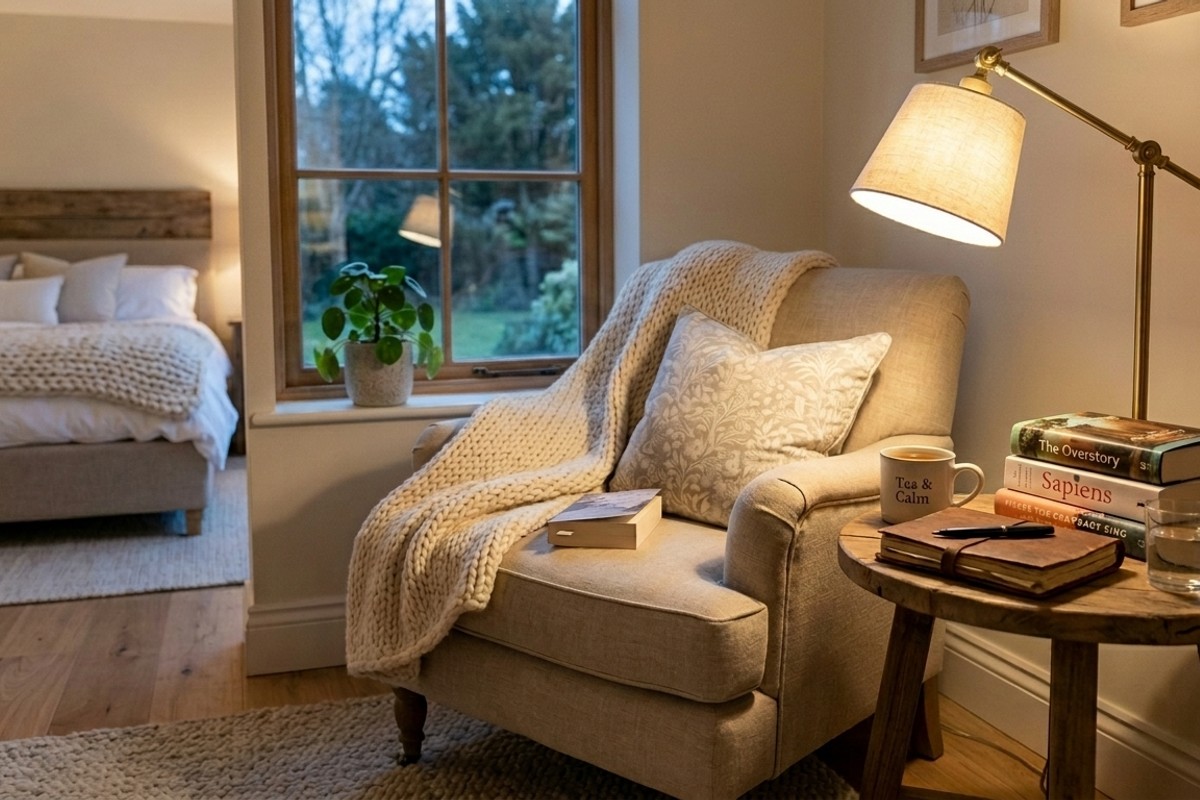
Dedicate a small, cozy space within your bedroom specifically for pre-sleep relaxation. This could be a comfortable armchair with a soft throw and a good reading light, or a plush floor cushion near a window. The purpose is to create a transition zone between your day and sleep.
Having a distinct “wind-down” spot signals to your brain that it’s time to disengage from daily tasks. Stock it with calming books, a journal, or a guided meditation app. This intentional space supports mental unwinding, fostering a truly sleep-promoting bedroom environment.
10. Declutter for Clarity
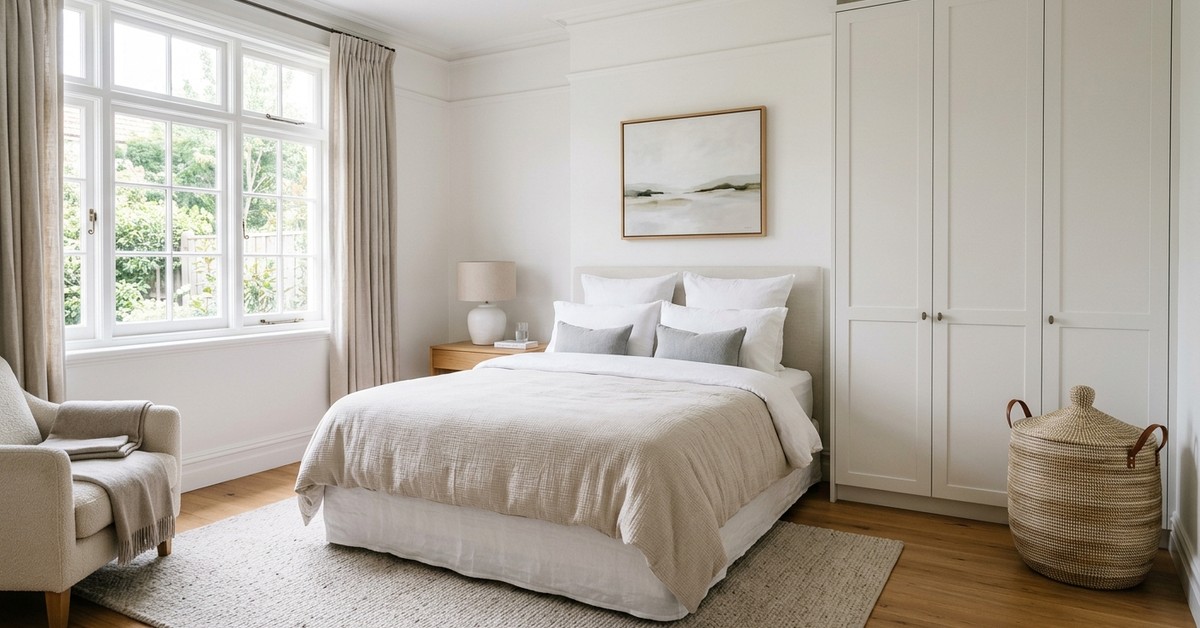
While often overlooked, maintaining a tidy and organized bedroom is fundamental to improved sleep quality. Visual clutter translates to mental clutter, making it harder to relax. Regularly clear surfaces, put away clothes, and organize drawers.
Invest in smart storage solutions – elegant baskets, closed cabinetry, or decorative boxes – to keep essentials accessible but out of sight. A consistently decluttered room provides a sense of peace and order, creating a truly stress-free bedroom. This simple habit makes all the difference in achieving deep rest.
Final Thoughts
These calming bedroom designs offer a spectrum of approaches to cultivate a space that truly supports your well-being and enhances your sleep. Whether you gravitate towards the serenity of minimalism or the warmth of natural textures, finding the right balance is key.
Which of these bedroom ideas for sleep resonates most with your personal style and needs? We encourage you to incorporate elements that speak to you, transforming your bedroom into a personalized haven for rest and rejuvenation.
Frequently Asked Questions
We hope you found your next Bedroom inspiration!
Thanks for visiting us!